
India has always been a maritime civilisation. With over 7,500 km of coastline and critical sea lanes cutting across the Indian Ocean Region, the Indian Navy is a historic force that protects trade, sovereignty, and national growth.
The Indian Navy is the maritime branch of the Indian Armed Forces, managed by the Chief of Naval Staff in New Delhi. From the Arabian Sea to the wider world, the Navy’s presence influences everything from energy security to economic stability. Here are 20 interesting fun facts that show why the Indian Navy matters far beyond warships.
India’s Naval Roots Go Back Thousands of Years
The origins of Indian seafaring trace back to the Indus Valley Civilisation. Later, powerful naval forces such as the Chola Empire and the Maratha Navy controlled major maritime trade routes.
India’s modern maritime strategy is built on centuries of oceanic engagement.
The Indian Navy Became a National Force the Same Day India Became a Republic
On 26 January 1950, when India adopted its Constitution, the Royal Indian Navy officially became the Indian Navy. So, that date did not just mark political independence; it marked the birth of a fully sovereign maritime command responsible for national security across the seas.
Over 95% of India’s Trade by Volume Travels Through Waters Protected by the Indian Navy
More than 95% of India’s trade by volume and nearly 70% by value moves through the sea. That means the country’s economy, energy imports, and global supply chains depend on maritime security across the Indian Ocean Region. Protecting these routes ensures uninterrupted free trade and stable economic activity.
The Indian Navy Operates Under Three Major Commands
The Navy functions through three main operational commands:
-
Western Naval Command (Mumbai)
-
Eastern Naval Command (Visakhapatnam)
-
Southern Naval Command (Kochi)
These commands secure both the Arabian Sea and the Bay of Bengal, ensuring coverage across the Indian Ocean Region.
India Is Among the Few Nations Operating Two Aircraft Carriers
The Indian Navy will operate two active aircraft carriers: INS Vikramaditya and INS Vikrant.
An aircraft carrier acts as a floating airbase, allowing the Navy to project air power across the indian ocean regionwithout relying on land infrastructure. INS Vikrant, built domestically, also represents a major step toward self reliant india in naval shipbuilding and indigenous construction capability.
The Arihant Class Submarines Form India’s Sea-Based Nuclear Deterrent
The Arihant-class submarines operate underwater as part of India’s strategic deterrence.
Because they remain hidden beneath the surface, they add a powerful layer of maritime security, especially in a region where naval developments involving China continue to shape the strategic environment.
The Indian Navy Has Conducted Anti-Piracy Operations for Over 15 Years
Since 2008, the Indian Navy has maintained anti-piracy deployments in the Gulf of Aden.
These operations protect merchant ships and secure sea lanes critical to global commerce, reinforcing India’s role in maintaining stability across the Indian Ocean Region.
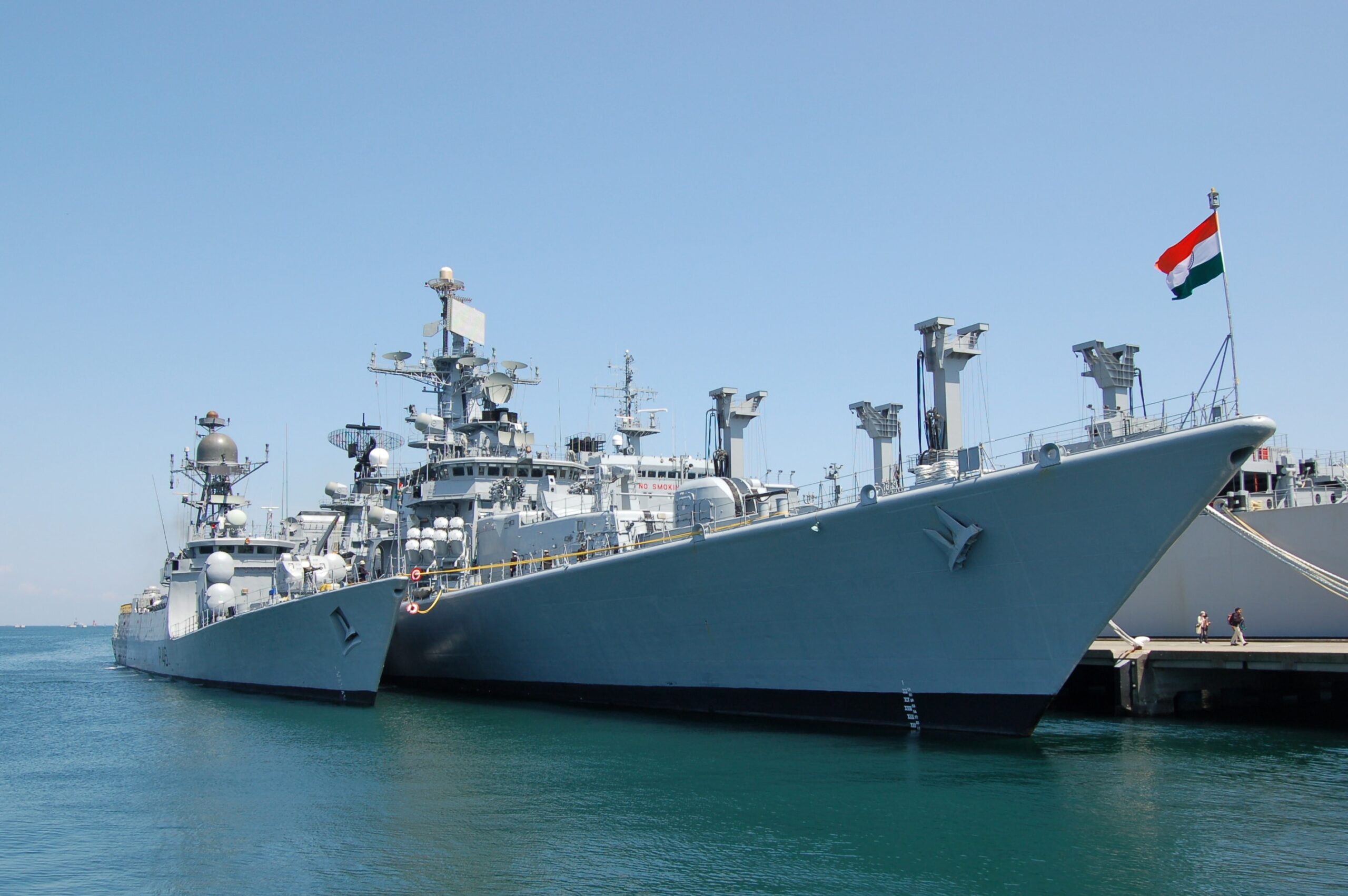
Guided Missile Destroyers Can Engage Threats in the Air, on the Surface, and Underwater
Modern guided missile destroyers in the fleet are equipped with advanced radar, missile systems, and anti-submarine capabilities.
They operate across the Arabian Sea and beyond, forming a defensive shield around high-value assets, including aircraft carrier battle groups.
Anti-Submarine Rocket Launchers Are Part of Modern Naval Warfare
Modern naval operations include systems like anti-submarine rocket launchers, designed to counter underwater threats.
These systems enhance protection for carrier groups and commercial shipping routes within the Indian Ocean Region, ensuring uninterrupted maritime activity.
Maritime Domain Awareness Is Powered by Information Technology
The Navy uses advanced information technology systems to track vessels, monitor maritime traffic, and maintain situational awareness.
Satellite inputs, surveillance networks, and digital data fusion enhance real-time maritime security, enabling rapid response to emerging threats.
The Indian Navy Currently Has 262 Active Vessels
As of 2026, the Indian Navy maintains an inventory of approximately 262 active vessels.
This includes submarines, aircraft carriers, guided missile destroyers, frigates, corvettes, and patrol vessels operating across the Indian Ocean Region.
Source: By Indian Navy, Wikimedia Commons
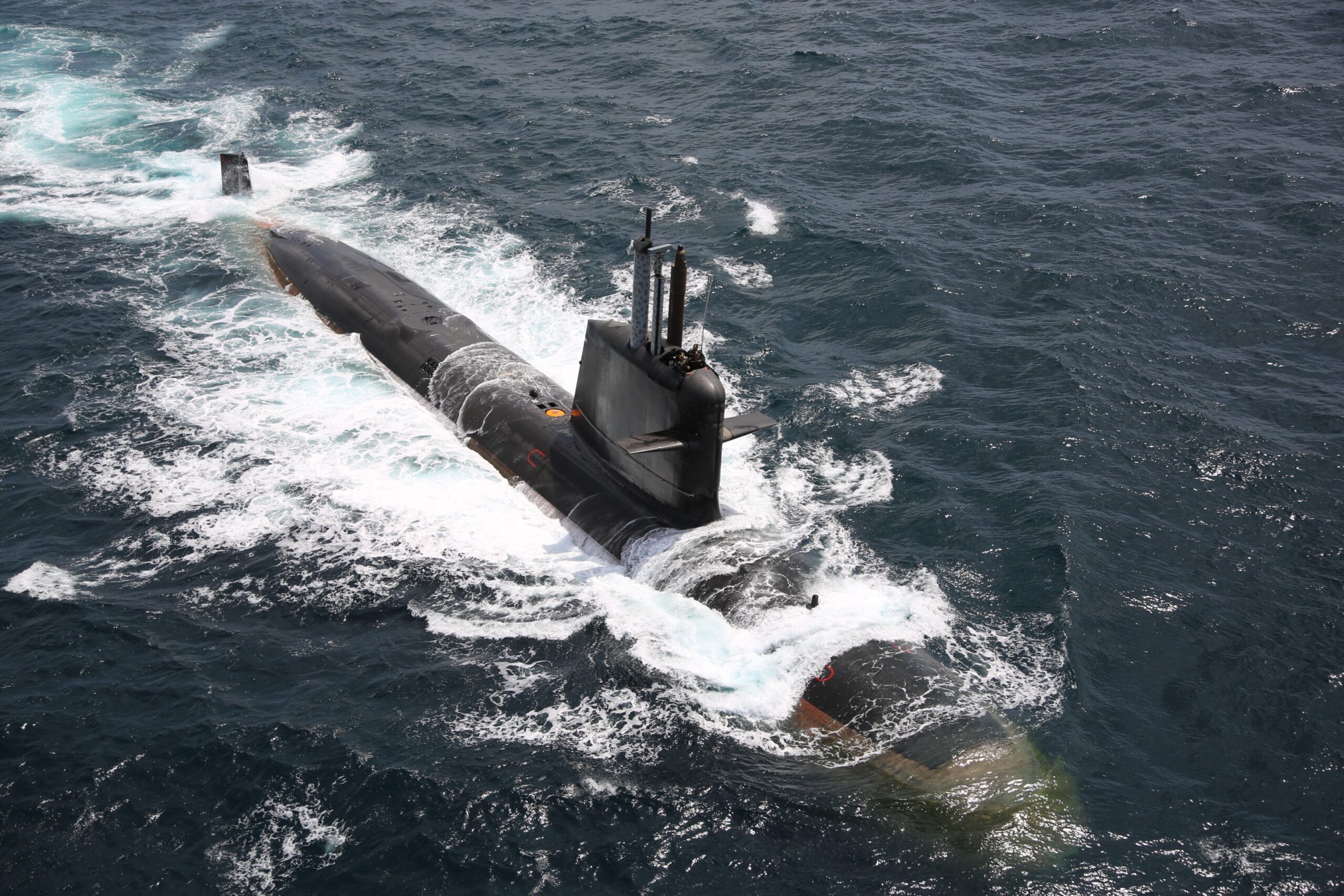
The Indian Navy Operates 18 Submarines
The fleet includes 18 submarines: both ballistic missile and attack types.
Submarine capability strengthens deterrence and ensures maritime dominance beneath the surface.
The Blue Economy Depends on Naval Stability
The Blue Economy includes fisheries, offshore energy, shipping, and port infrastructure.
A stable maritime environment, ensured by the Indian Navy, allows these sectors to operate safely, supporting national development, coastal livelihoods, and economic resilience.
Atmanirbhar Bharat Is Reshaping Defence Manufacturing
Under Atmanirbhar Bharat, India has prioritised self-reliance in the defence sector.
The Navy is central to this effort, expanding domestic defence manufacturing and strengthening indigenous defence production capabilities. Shipyards, engineering firms, and skilled labour are increasingly contributing to naval modernisation. Approximately 60 ships are currently under construction in Indian shipyards.
This shift toward domestic shipbuilding strengthens defence manufacturing and defence production, aligning directly with the goals of Atmanirbhar Bharat.
Naval Personnel Begin With Rigorous Basic Training
Every officer and sailor undergoes structured basic training before moving into specialised roles.
From navigation and engineering to aviation and operational support, personnel operate in high-responsibility environments, often under active service conditions.
The Indian Navy Operates 136 Patrol Vessels
The Indian Navy operates approximately 136 patrol vessels that safeguard India’s coastline and monitor activity across the Indian Ocean Region. These vessels support maritime security, anti-piracy missions, and coastal surveillance on a daily basis.
The Indian Navy Participates in Major Global Exercises Like Malabar
The Indian Navy regularly participates in international naval exercises such as Exercise Malabar, enhancing interoperability with global partners. These engagements strengthen India’s maritime security cooperation across the Indian Ocean Region and beyond.
The Indian Navy Executes Four Core Roles Beyond Warfare
The Indian Navy performs four primary roles: Military, Diplomatic, Constabulary, and Benign.
Beyond combat operations, it conducts anti-piracy patrols, provides Humanitarian Assistance and Disaster Relief (HADR), and builds partnerships across the Indian Ocean Region, reinforcing maritime security and regional stability.
The Union Budget Plays a Role in Naval Expansion
The Union Budget 2025-26 is expected to significantly increase allocation for the defence sector, particularly for the Indian Navy. The push for Atmanirbhar Bharat suggests that indigenous manufacturing of naval systems will receive substantial policy support and funding.
2026 Marks the Largest Annual Expansion in Its History
In 2026, the Navy is commissioning 19 warships in a single year, its largest annual expansion.
This demonstrates rapid modernisation and growing strategic capability in the defence sector.
A Historic Force with a Modern Mandate
The Indian Navy is more than a fleet of ships. It is a cornerstone of national security, a guarantor of free trade, and a key contributor to India’s strategic stability in the Indian Ocean Region.
Through aircraft carrier capability, the deterrent strength of the Arihant class, advanced guided missile destroyers, and expanded defence manufacturing under Atmanirbhar Bharat, the Navy continues to advance the vision of a self reliant india.
Its impact extends from the depths of the sea to the everyday functioning of the national economy.
FAQs
1. When was the Indian Navy established
The modern Indian Navy was formally established on 26 January 1950.
2. How many aircraft carriers does India operate
India operates two active aircraft carriers: INS Vikramaditya and INS Vikrant.
3. What is the Arihant class
The Arihant class consists of nuclear-powered submarines that form part of India’s strategic deterrence framework.
4. How does the Indian Navy support India’s economy
By ensuring maritime security and protecting free trade routes across the Indian Ocean Region, the Navy supports national supply chains and economic stability.
5. What is the role of Atmanirbhar Bharat in naval development
Under Atmanirbhar Bharat, India promotes self-reliance in the defence sector, expanding domestic defence manufacturing and defence production.