

The carbon intensity indicator is now one of the most consequential metrics in global shipping. Whether you own a single bulk carrier or manage a diversified fleet, understanding how CII ratings work-and how they affect your bottom line-is no longer optional. This guide breaks down the system, the math, and the practical steps ship owners can take to stay compliant and commercially competitive.
Key Takeaways
-
The carbon intensity indicator(CII) is an IMO-mandated annual rating of a ship’s operational carbon intensity, graded from A (best) to E (worst), measured in gCO₂ per cargo carrying capacity and nautical mile.
-
CII has been a mandatory measure since 1 January 2023 for all ships of 5,000 gross tonnage and above on international voyages, with the first attained CII for 2023 operations verified in 2024.
-
Every vessel has a required annual operational CII target and an attained annual operational CII; compliance depends on keeping the attained value at or better than the required CII threshold.
-
CII rating thresholds tighten every year through at least 2030, so a vessel can slip from a C rating to a D rating without changing operations at all.
What Is the Carbon Intensity Indicator (CII)?
The carbon intensity indicator is an operational measure under MARPOL Annex VI Regulation 28 that quantifies a ship’s operational carbon intensity in grams of CO₂ emitted per tonne-nautical mile of transport work. It is mandated by the International Maritime Organisation as part of IMO regulations aimed at reducing greenhouse gas emissions across the shipping sector.
CII converts annual fuel consumption data across all fuel types into CO₂ emissions, then divides by transport work-the ship’s capacity multiplied by distance sailed-to produce a carbon intensity rating that reflects real-world energy efficiency, not just ship design. CII measures grams of CO₂ per cargo-carrying capacity and nautical mile. CII ratings range from A (best) to E (worst), where A represents major superior performance and the midpoint of C aligns with the required CII for each ship type and size.
This framework supports IMO’s commitment to cutting carbon intensity by at least 40% from 2008 levels by 2030, with further ambition set at MEPC 80 in July 2023. Unlike the existing ship index (EEXI), which is a one-off design benchmark of a ship’s energy efficiency, CII is an annual operational performance rating tied to actual service.
Who Must Comply and From When?
CII regulations entered into force on 1 January 2023. CII applies to all ships over 5,000 gross tonnage operating internationally under the International Convention for the Prevention of Pollution from Ships.
Affected ship types include:
-
Bulk carriers and tankers
-
Container ships and general cargo vessels
-
Refrigerated cargo carriers and vehicle carriers
-
Ro-Ro cargo and RoPax vessels
-
LNG carriers and gas carriers
-
Cruise ships
Domestic trades fall outside the formal scope, though many shipping companies adopt similar standards for commercial reasons. Fuel consumption data has been reported annually to the IMO data collection system since 2019, and the first required and attained CII values were calculated for calendar year 2023, with Statements of Compliance issued in 2024. CII must be reported annually within three months after the year-end. Compliance obligations sit with the DOC holder, typically the shipowner or manager, but charterers and port authorities increasingly factor the performance rating into commercial operations and vetting.
How CII Is Calculated and Rated
CII calculations rely on data from the data collection system covering fuel consumed and distance sailed during the previous calendar year. The aer calculation works in plain language as follows: the actual annual operational cii equals annual CO₂ emissions divided by the product of the ship’s capacity and distance sailed in nautical miles-the annual efficiency ratio of operational carbon intensity.
-
For most cargo vessels, deadweight tonnage is the capacity measure.
-
For cruise ships and some passenger vessels, gross tonnage is used.
-
The resulting unit is gCO₂ per tonne-nautical mile.
The required annual operational CII is derived from a reference line for the ship’s type and size (based on 2019 fleet data), reduced by a mandatory reduction factor (Z%) that increases each year. The attained CII is the vessel’s actual performance. Correction factors and voyage adjustments-covering ice navigation, STS operations, port stays beyond the master’s control-may be applied. These should be reflected transparently in all CII calculations and documentation to ensure the CII calculated value is defensible during audits.
CII Rating Bands: A to E Explained
Ships are assigned an annual operational carbon intensity rating band from A to E based on their attained CII relative to required cii rating thresholds for that year.
-
A – major superior: significantly better than the required cii
-
B – minor superior: moderately better than the required cii
-
C – compliant: performance at or near the required cii midpoint
-
D – minor inferior: worse than required, triggering monitoring
-
E – inferior performance level: significantly worse than required
CII ratings range from A (best) to E (worst) based on performance. Ships rated with an A or B carbon intensity rating signal strong transport efficiency. The attained and required cii values appear on the DCS Statement of Compliance, kept onboard for at least five years.
A ship rated D for three consecutive years must submit a corrective action plan. An e rating in any single year also requires a corrective action plan under seemp part iii before the next SoC issuance.
Why CII Gets Tougher Every Year
CII targets become stricter each year, aiming for 40% reduction by 2030. The reduction factor Z increases annually, lowering the required cii line and making continuous improvement essential. CII ratings tighten by approximately 2% annually from 2023 onward, and CII thresholds tighten annually, increasing compliance difficulty.
| Year | Reduction Factor (Z%) |
|---|---|
| 2023 | 5% |
| 2024 | 7% |
| 2025 | 9% |
| 2026 | 11% |
| 2027 | ~13.6% |
| 2028 | ~16.25% |
| 2029 | ~18.9% |
| 2030 | ~21.5% |
Operational and Technical Drivers of CII Performance
Carbon intensity depends on both how a vessel is operated and its technical condition. Identical sister ships on different trade routes can receive very different operational carbon intensity ratings because of speed, distance sailed, and port patterns.
Key operational factors:
-
Average speed profiles and slower speeds during laden and ballast legs
-
Waiting time at anchor and port congestion reducing cargo carried per mile
-
Ballast-leg share and overall cargo utilisation
-
Weather routing and just-in-time arrivals
Key technical drivers:
-
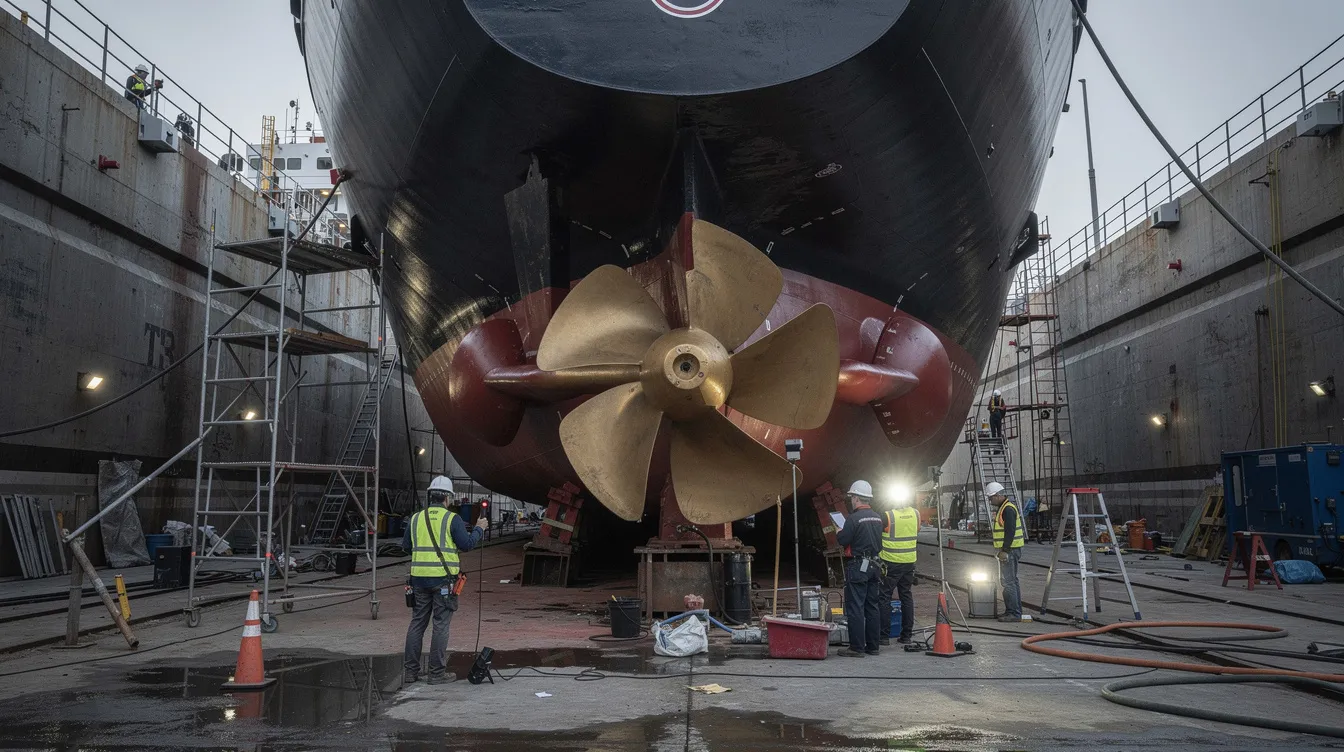
Hull fouling-hull cleaning can improve CII ratings by 3–9%
-
Propeller condition, engine tuning, and energy efficiency devices (ducts, fins)
-
Wind power and wind-assisted technologies can improve CII ratings significantly
-
Fuel type: VLSFO vs LNG, biofuels, and emerging low carbon fuels or zero carbon fuels
Data quality is critical. Inaccurate fuel consumption data or distance logging distorts the attained CII, so robust monitoring systems and crew training in ship energy efficiency management are essential.
How to Improve Your CII Rating in Practice
Improving CII means either reducing CO₂ emissions or increasing useful transport work for the same fuel burned. Operational measures to improve CII include speed reduction and route optimization. Operational measures can reduce CII by 5–15% immediately.
High-impact operational measures:
-
Speed optimization and trim/draft management
-
Weather routing to reduce carbon intensity per voyage
-
Just-in-time arrival strategies that cut idle fuel consumed
-
Reducing ballast legs and maximizing cargo carrying capacity
Technical upgrades:
-
Scheduled hull cleaning and high-performance anti-fouling coatings
-
Propeller polishing and shaft power limitation (EPL)
-
Installing energy saving devices (Mewis ducts, pre-swirl fins)
-
Engine de-rating for operational efficiency at reduced loads
Fuel strategies:
-
Switching to lower-carbon fuels where engine and supply chains allow
-
Pilot biofuel trials, optimizing auxiliary consumption in port
Nautilus Shipping integrates these CII measures into vessel-specific improvement plans under the energy efficiency management plan, balancing operational efficiency, schedule integrity, and commercial constraints.
SEEMP Part III, CII Reporting and Corrective Action Plans
The efficiency management plan seemp part iii is each vessel’s mandatory plan for achieving continuous improvement in operational carbon intensity. It must include methodology for cii calculations, annual required cii values, implementation measures, data collection procedures, and a CII monitoring approach.
The annual cii reporting process follows this sequence:
-
Submit annual data (fuel and distance) to IMO DCS
-
CII calculated and verified by the recognized organization or flag
-
Statement of Compliance issued with attained cii, required cii, and rating
Annual CII data must be reported within three months after year-end. For ships rated D for three consecutive years or receiving an E rating in any year, the owner must submit a corrective action plan analyzing why the required cii was not met, setting numerical targets, and listing concrete operational improvements with timelines. Nautilus Shipping assists with preparing, updating, and implementing SEEMP Part III and corrective action plans, including liaison with class and flag for timely approvals.
Commercial Impact of CII Ratings for Shipowners and Charterers
The CII rating is rapidly becoming a commercial KPI that shapes operational decisions well beyond regulatory compliance. CII ratings impact commercial operations and charter appeal significantly, and CII ratings influence the net asset value of shipping companies.
-
Vessels receiving A or B ratings are highly sought after in the market. Charterers prioritize ESG metrics and prefer vessels with A or B ratings, often qualifying them for “green” charters.
-
C-rated vessels are compliant but face growing scrutiny as rating thresholds rise, potentially seeing shorter employment terms.
-
D/E rated vessels face increased scrutiny from port state control. Continuous poor performance can result in increased operating costs, and a poor CII rating can lead to loss of trading certificates or vessel retirement.
-
The CII rating system encourages companies to upgrade fleets to maintain compliance.
Nautilus Shipping’s Role in CII Management and Fleet Efficiency
Nautilus Shipping operates as a ship management partner helping owners align operational performance, regulatory compliance, and sustainability across the full vessel lifecycle.
Our services linked to CII include:
-
Technical management focused on ship’s energy efficiency, hull and machinery condition, and energy saving devices
-
Crew management and training for accurate fuel consumption data recording and voyage adjustments documentation
-
Pre-fixture and post-fixture CII scenario modelling for bulk carriers, tankers, and container ships to guide routing, speed, and cargo planning
-
Vessel inspections with CII performance diagnostics, identifying gaps to the required cii and recommending targeted cii measures
Integrating CII into everyday fleet operations helps maintain ships rated at C or better, avoids costly last-minute corrective actions, and supports owners’ wider decarbonization roadmaps-turning compliance into a genuine competitive advantage.

FAQs
1. Does CII apply to my coastal or domestic fleet if they do not trade internationally?
IMO CII requirements under MARPOL Annex VI formally apply to ships of 5,000 gross tonnage and above engaged in international voyages, not purely domestic traffic. However, some flag States and regional regulators may extend similar carbon intensity rules to domestic fleets, and charterers may still request CII-style annual data from domestic tonnage. Even for domestic ships, tracking carbon intensity and operational efficiency is commercially beneficial, and Nautilus Shipping can apply the same principles to these fleets.
2. How often is CII calculated and can I monitor it during the year?
Regulatory CII is calculated annually based on the previous calendar year’s verified DCS data, with the rating recorded once per year on the Statement of Compliance. However, owners and managers increasingly use dashboards to track year-to-date attained annual operational cii so they can adjust speed, routing, and operations in real time. Nautilus Shipping recommends continuous monitoring rather than waiting until year-end, to avoid unexpectedly falling into D or E bands.
3. What is the difference between required CII and attained CII in simple terms?
The required CII is the target carbon intensity for a particular ship type, size, and year, set by IMO using reference lines and reduction factors. The attained CII is the actual carbon intensity indicator calculated from the vessel’s own yearly fuel consumption and distance sailed. Compliance is achieved when the attained CII is equal to or numerically lower (better) than the required CII for that year.
4. Can charterers be held responsible for poor CII ratings?
Legally, the shipowner or ISM manager remains responsible for regulatory compliance, including CII reporting and corrective action plans. However, charterparty clauses are increasingly being updated so that speed orders, routing, and employment patterns take CII into account, sharing responsibility in practice. Owners should negotiate CII-aware charter terms, and Nautilus Shipping can support with technical input when drafting or reviewing such clauses.
5. How does CII interact with regional schemes like the EU ETS for shipping?
CII is an IMO global operational carbon intensity measure, while EU ETS is a regional cap-and-trade system assigning a price to CO₂ emissions on specific voyages. Better CII performance generally leads to lower total fuel burned for the same transport work, which reduces emissions cost exposure under EU ETS. Nautilus Shipping helps owners align CII strategies with EU ETS and other imo regulations so that technical and operational measures deliver both compliance and cost savings across supply chains.