
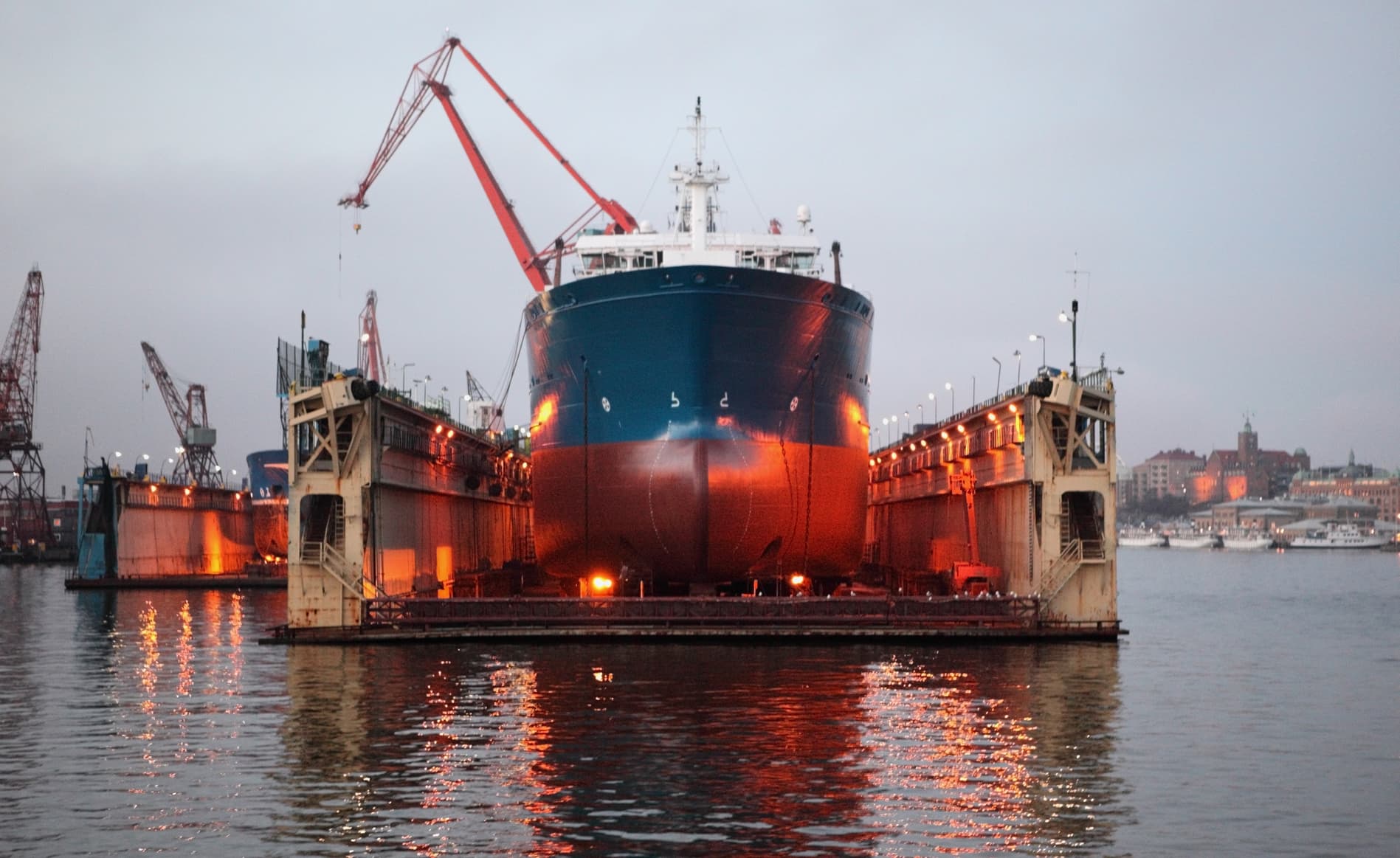
Dry docking is one of the most critical and complex phases in a vessel’s operational life. It is the point where the invisible becomes visible, where submerged structures, hidden corrosion, and long-term wear can finally be inspected, assessed, and addressed. While ships are designed to operate for decades, their safety, efficiency, and regulatory status depend heavily on how well their dry docking cycles are planned and executed.
Dry dock planning is never just a maintenance task. It is a strategic activity that influences vessel reliability, crew safety, operational uptime, fuel efficiency, and asset value. When approached with discipline and foresight, dry docking enhances performance and reduces risk. When rushed or underplanned, it can lead to delays, budget overruns, technical failures, and even safety incidents. This guide explains what dry docking involves, why it matters, and how shipowners and managers can approach it more effectively.
What Is Dry Docking?
Dry docking refers to the process of bringing a vessel into a dock where the water is removed so that underwater parts of the ship can be accessed for inspection, cleaning, and repair. This allows shipyard personnel and the ship’s dock crew to work on the ship’s hull, propeller, rudder, sea chest, ballast tanks, underwater valves, and other submerged components that are normally inaccessible while the ship is afloat.
There are two primary types of docks used for this purpose:
-
Graving dock: a permanent basin constructed into the shore with gates that close to allow water to be pumped out.
-
Floating dock: a mobile structure that submerges to receive the ship and then rises as water is pumped out.
Once the vessel enters the dock, it is positioned carefully so the ship sits on keel blocks and side blocks arranged according to the vessel’s docking plan. These blocks support the ship’s weight safely while water is drained from the dock and the vessel is exposed for work.
Why the Dry Docking Process Is Important
The dry docking process plays a vital role in ensuring vessel safety, performance, and compliance.
From a structural perspective, it allows detailed inspection of the hull for corrosion, cracks, deformation, and coating failure. From a safety standpoint, it enables testing and repair of critical systems such as fire detection, underwater valves, and sea inlets. From an operational standpoint, cleaning and repainting the hull helps improve hydrodynamic performance and reduce fuel consumption.
Equally important, dry docking is required by classification societies and regulatory authorities. Without timely docking and surveys, ships cannot maintain class, insurance, or trading approvals. For merchant vessels and cruise ships alike, dry docking is a regulatory, technical, and commercial necessity.
Planning and Scheduling
Effective dry dock planning begins several months before the vessel enters the dock. Technical managers review the vessel’s operational schedule, upcoming surveys, past maintenance history, and current condition to determine the most suitable docking window.
Planning typically includes:
-
Reviewing previous inspection and maintenance records
-
Conducting pre-dock inspections to identify repair needs
-
Coordinating with shipyards and contractors
-
Defining a detailed scope of work
-
Preparing budgets and spare parts lists
-
Aligning docking schedules with charter and trading commitments
Strong scheduling and project management are essential to avoid conflicts, ensure material readiness, and minimize downtime for the vessel.
Planned maintenance management is therefore of utmost importance, and it is equally important to ensure that the crew is trained and prepared for it. Read our blog on the importance of training crew for more insights: https://nautilusshipping.com/news-and-insights/importance-of-crew-training-for-technical-ship-management-companies-in-india
Things to Keep in Mind
Several technical and operational factors must be carefully managed before and during docking:
-
The vessel should arrive with minimal ballast and no cargo.
-
Trim and stability must be controlled as water is pumped out.
-
Sensitive equipment such as echo sounders and sensors must be positioned clear of blocks.
-
Drain plugs and tank access points must be prepared.
-
Crew members must be briefed on safety, responsibilities, and workflows.
The dock master coordinates vessel positioning, pumping operations, and block alignment to ensure the ship sits safely and evenly on the dock floor.
Compliance and Regulatory Requirements
Dry docking is closely linked to regulatory compliance. Classification societies and flag administrations define inspection cycles and survey requirements. Typically, vessels undergo a major dry dock every five years, with intermediate surveys conducted between dockings.
Failure to comply can result in loss of class, detentions, or operational restrictions. Therefore, compliance planning is not separate from technical planning — it is integrated into the dry dock schedule.
Timelines and Duration in the Dry Docking Process
The dry docking period varies based on vessel size, condition, and scope of work. Routine dockings may take 10 to 14 days, while major repairs, retrofits, or steel renewals can extend the period significantly.
Time is allocated for:
-
Dock entry and positioning
-
Pumping down the dock and stabilizing the vessel
-
Inspections, ship repairs, and maintenance
-
Flooding the dock and refloating
-
Trials and recommissioning
Unexpected issues such as corrosion, material delays, or weather disruptions can extend timelines.
What Happens at the Dry Dock
Man painting ship with copper-based paint in dry dock
Once dry, the vessel undergoes a structured program of inspections and work:
-
High-pressure washing to remove marine growth and contaminants
-
Blasting and surface preparation
-
Repainting with protective and anti fouling coatings
-
Inspection of the hull structure and thickness
-
Servicing propellers, rudders, and underwater fittings
-
Cleaning and inspection of ballast tanks and sea chests
-
IEngine room inspections and machinery maintenance
-
Testing safety and fire detection systems
Hot work, steel renewals, and welding are carefully controlled under safety permits.
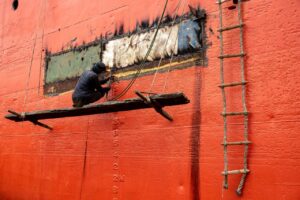
Dhaka, Bangladesh – 14 September, 2018: A construction worker welds on a suspended plank beside a bright red ship hull, using safety ropes. The scene captures industrial maintenance, maritime work, and high-altitude welding on a large vessel.
How Dry Docking Helps
When properly executed, dry docking delivers long-term value:
-
Extends vessel service life
-
Improves fuel efficiency and performance
-
Prevents structural deterioration
-
Reduces operational and safety risks
-
Supports regulatory compliance
-
Enables predictive and preventive maintenance
It shifts maintenance from reactive to proactive, supporting reliability and lower long-term costs.
Safety and Risk Management
Dry docking environments combine maritime hazards with construction risks. Falls, fires, flooding, and equipment failure are real threats. Robust safety procedures, training, supervision, and coordination are essential to protect crew members and shipyard personnel.
Conclusion
Dry dock planning is a critical period in the operational life of any vessel. It requires foresight, coordination, regulatory awareness, and technical expertise. When managed proactively, dry docking becomes a strategic investment, not merely a maintenance event.
By planning carefully, coordinating effectively, and maintaining strong safety and compliance standards, shipowners and managers can ensure vessels return to service in optimal condition, supporting safe operations, commercial performance, and long-term success.
Explore our approach to ship management here: https://nautilusshipping.com/service/ship-management
FAQs
1. How often does a ship need dry docking?
Most vessels undergo dry docking every five years, with intermediate inspections in between.
2. Who manages the dry docking process?
Technical managers, the dock master, project managers, shipyard personnel, and the ship’s crew work together.
3. Can dry docking be delayed?
In some cases, in-water surveys or extensions are permitted, subject to regulatory approval.
4. Why is hull cleaning important?
It reduces drag, improves fuel efficiency, and protects against corrosion.
5. What causes delays during dry docking?
Unexpected damage, material shortages, scope changes, and weather conditions are common causes.