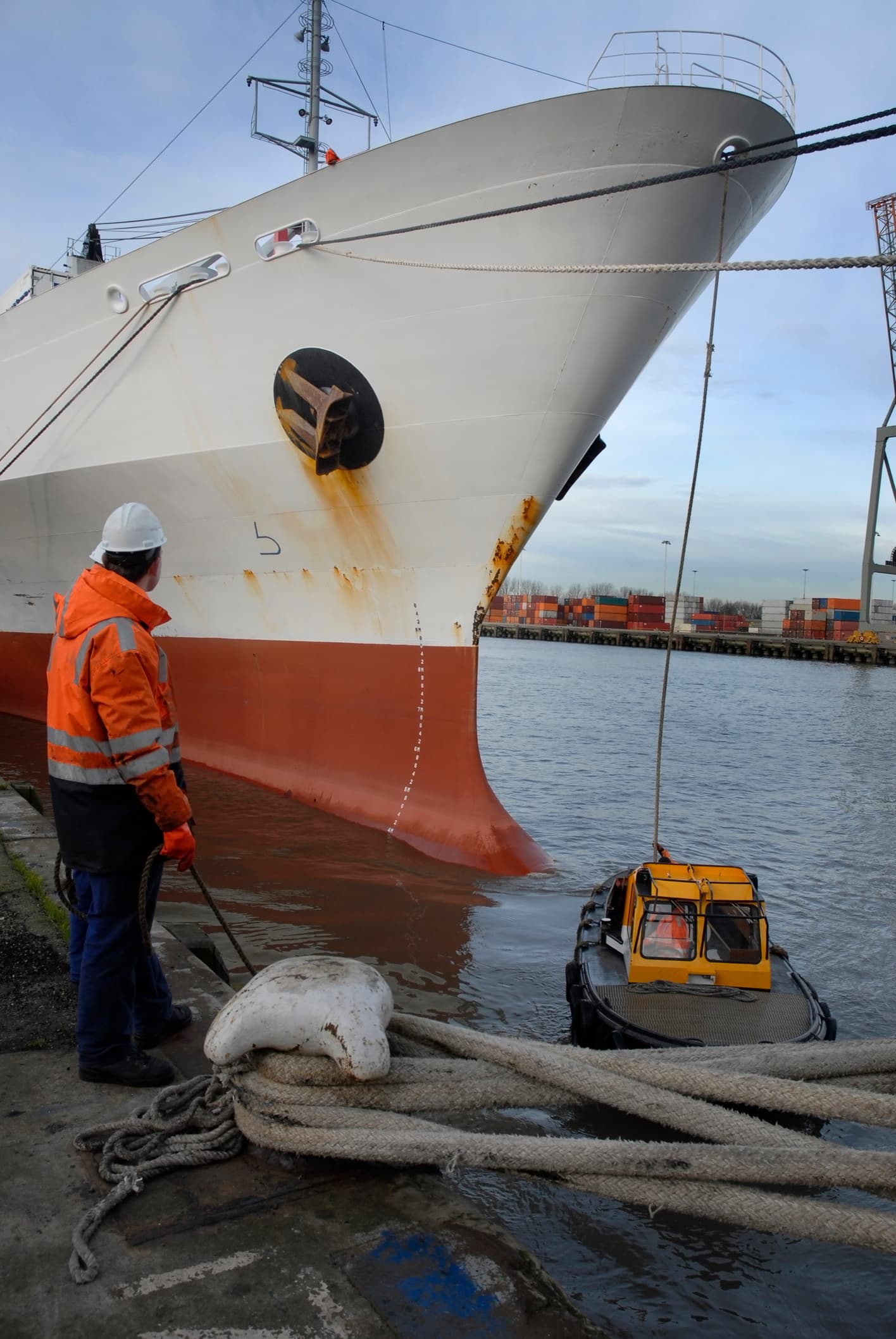
If you are serving on a sea-going bulk carrier engaged in unrestricted worldwide trade, flying any international Flag and classed with any 1st Class Register, sometimes you may find that the vessel is classed for IN-Water Survey.
What is this Class Notation, and what does this mean to a Chief Engineer on board that ship? Let us understand this.
Introduction
To begin with, for all the senior engineering officers, an IN-Water Survey (IWS) is a management decision that has direct consequences on class compliance, charter obligations (including off-hire risk), machinery reliability, and, of course, personal accountability.
Acceptance of an IWS in lieu of dry-docking shifts greater responsibility onto shipboard technical management, particularly the Chief Engineer.
Therefore, let’s envision a scenario – The vessel is approaching an Intermediate or Special Survey dry-dock window. To avoid Off-hire, the company proposes an IN-Water Survey.
Scope of IN-Water Survey for Ships
Typically, a Class Surveyor would inspect the following during an IN-Water survey:
-
Hull and coating condition
-
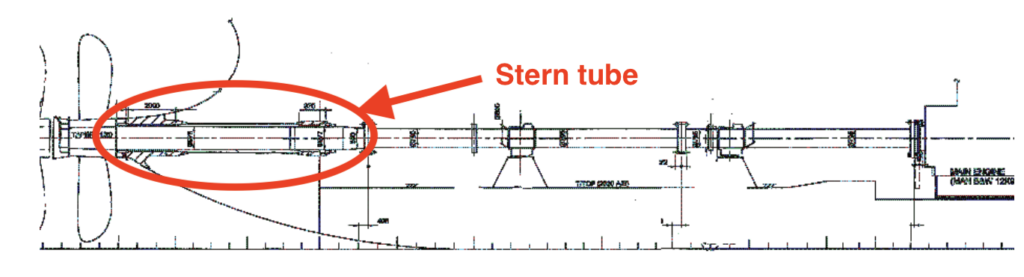
Propeller, Boss, and Stern tube external seals
-
Rudder, Pintles, and Gudgeons
-
Sea chests, Overboard openings, Bilge keels
-
Cathodic Protection and Anodes
These elements form the core of ship underwater inspection and survey services, which are central to the execution of any approved ship in water survey requirements.
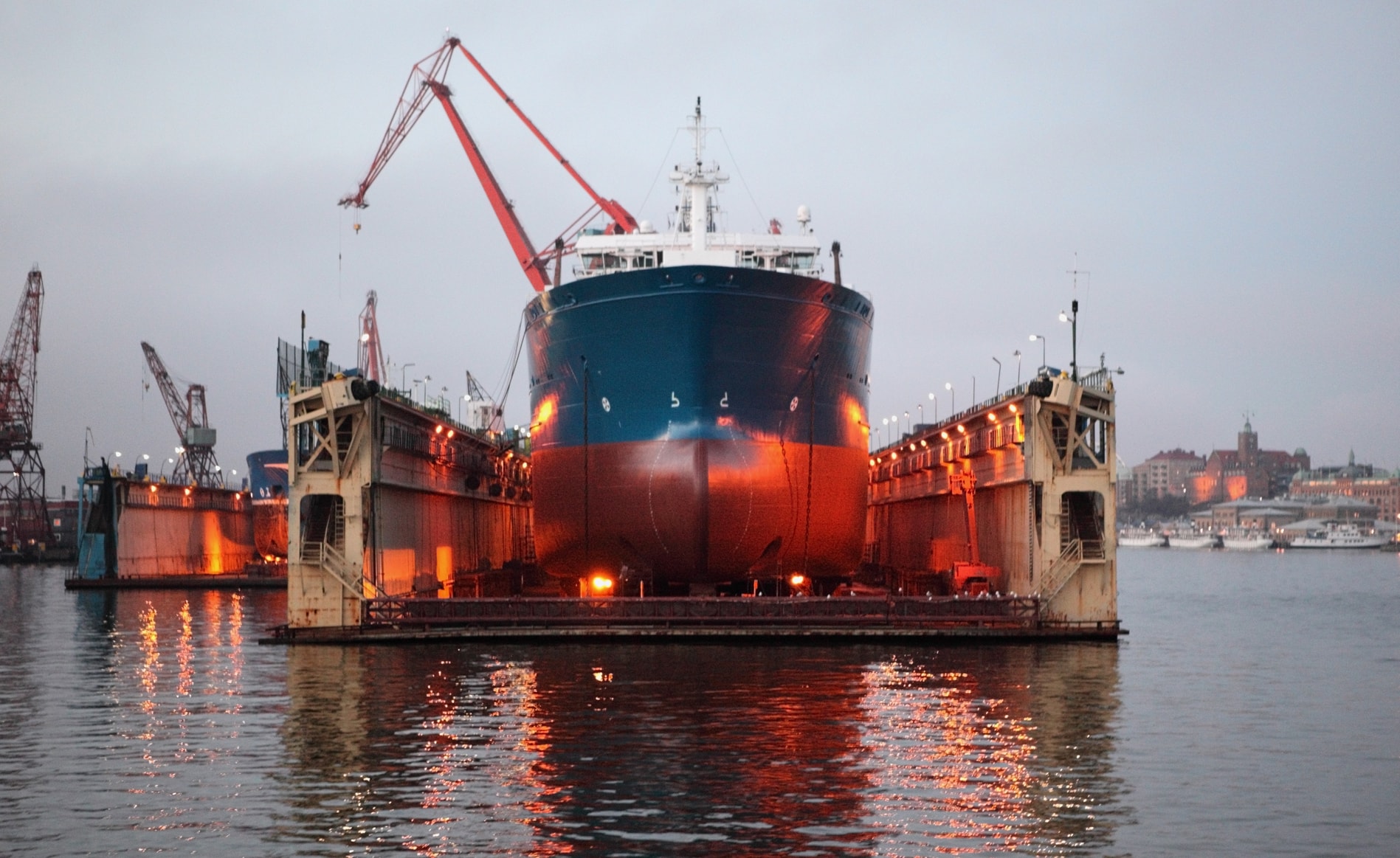
Initial Eligibility Requirements by Flag State and Class
Before approving an IN-Water survey, the Flag State Administration and Classification Society will conduct a Risk Assessment reviewing the period since the last docking.
This would broadly include the following pre-conditions relating to:
Class and Statutory Status
-
The vessel must have operated in continuous class without suspension
-
There should be zero outstanding Conditions of Class
-
All statutory surveys must be valid and harmonized
-
There must be no unresolved ESP deficiencies
Further to the above, Class shall also check for any damages to the vessel and its operational history with regard to the following:
-
Whether the vessel has suffered any grounding, collision, or heavy weather damage
-
The vessel should not have undergone any underwater repairs since the last dry-dock
-
There should have been no Stern tube leakages or propulsion abnormalities
Class shall also review the previous Dry-Dock findings, especially:
-
Hull thickness margins basis the original scantlings
-
The condition of the Hull coating and wastage of the sacrificial anodes shall be assessed
-
Any structural repairs that may have been done at Aft shall be checke
-
Bilge level structures and Sea chests shall be examined
In addition to all the above, Class shall also take note of the vessel’s PSC detention record (if any) and any repeated Hull, Steering, or Propulsion deficiencies that may have been recorded.
These collectively determine compliance with the ship in water survey requirements for approval of an IN-Water survey (IWS) for seagoing vessels.
Where and how will the Survey be conducted?
An IN-Water survey typically would involve underwater inspection of the Hull with the help of Divers and Underwater inspection equipment such as Remote Operated Vehicles (ROVs) equipped with High-Definition cameras.
Such inspections form part of professional ship underwater inspection and survey services, often incorporating advanced ROV hull inspection for IWS to provide real-time visual evidence to the attending surveyor.
However, to conduct an IN-Water survey for ships, certain conditions must be met:
-
The Hull should be clean. If not, then cleaning of the Hull would have to be done using a team of Divers equipped with underwater cleaning machines
-
The Divers and ROVs should be Class-approved
-
A Continuous video and live coverage should be provided for the surveyor’s oversight
As a Chief Engineer, how do you prepare for the IN-Water Survey?
As for any other Survey, a Chief engineer needs to be prepared to present the vessel for this survey too. These preparations would include readiness of physical conditions and documentary evidence, such as:
-
Collect and assimilate the records of the Stern tube and Propulsion history
-
Secure the Main engine and the Propeller to prevent any danger to the Diving personnel
-
Conduct a Safety meeting with the ship staff, the Diving team and the Surveyor emphasizing the Risks and the Preventive actions.
-
All Sea valves should be identified and tagged. If possible, any suction and discharges on the shipside should be isolated
-
Assist the Class surveyor with all the necessary technical details
Note: The Chief Engineer should know that the following will not be done during an IWS:
– No internal structural inspection
– No bearing clearance measurement
– No tank testing
Having known all the above, some inevitable questions may still arise. Let’s answer some of these.
Frequently Asked Questions
Question: Did you know that a Chief Engineer has an option to oppose an IN-Water Survey?
Answer: Yes, he can.
-
When, in his professional opinion, he assesses that the technical risks outweigh commercial benefits.
-
If he/she considers that any of the initial Eligibility requirements are compromised enough to weaken the defensibility of IWS acceptance
-
If the survey conditions are not met, such as: Poor underwater visibility, Heavy fouling, or the use of non-approved Diving or ROV contractors
Note: Chief Engineer’s opposition should always be documented in writing, as that would protect the Chief Engineer by ensuring that technical risk awareness is formally recorded
Question: Can Class revoke or withdraw the IN-Water Survey?
Answer: Yes, they can.
Class reserves the right to revoke or withdraw the IN-Water survey under any of the following situations:
-
If the survey is conducted improperly
-
Non-disclosure/Concealment of any defects affecting Eligibility requirements
-
Any instruction from Flag Administration to withdraw the IWS acceptance
-
Violation of the trading or operational limitations attached to the IWS approval
-
Expiry of the applicable survey window
-
If any revised Class or Statutory rules apply
Upon revocation of IWS acceptance, the Classification Society may require immediate dry-docking, impose Conditions of Class, restrict trading, or suspend class, depending on the severity of the circumstances.
Question: Can the IN-Water notation itself be revoked?
Answer: Yes, it can.
An IWS notation is a Class Status Endorsement and not a permanent status. It is accepted in lieu of Dry-docking and therefore is considered ‘Conditional’. Therefore, it can be revoked when the conditions under which it was granted are no longer satisfied, i.e, if the Initial Eligibility conditions are not met.
Note: Upon revocation of the IWS notation, the classification society may remove the notation from the class record and reinstate the dry-docking requirement. Additional actions may include the imposition of Conditions of Class, trading restrictions, or suspension of class, depending on the severity and nature of the circumstances. Ship staff are expected to promptly report any event or condition that could affect the continued validity of the IWS notation.
The Benefit of IN-Water Survey:
Having an IN-Water Survey notation provides many benefits to a Shipowner. Once the IWS Survey is accepted, the following benefits are realized:
– Dry-docking of the ship can be deferred. This is the primary benefit of an IWS notation, wherein a vessel can remain in operation, and the Survey cycle is maintained.
– Direct cost savings as there is a significant reduction in Off-Hire time and Loss of Charter income.
– Moreover, Charterers would be more inclined to hire the vessel as its availability is extended – this is a commercial positive.
– Future maintenance can be planned effectively, and Class and Statutory surveys can be harmonised