
A planned maintenance system shipping program is no longer a “nice to have.” In 2026, it is central to safety, charter performance, regulatory compliance, and predictable vessel maintenance costs.
Key Takeaways
-
A planned maintenance system is software plus process for planning, assigning, completing, and recording maintenance tasks onboard.
-
PMS is mandatory under the International Safety Management Code, and the ISM Code mandates a Planned Maintenance System for ships covered by SOLAS, typically cargo ships above 500 GT and passenger ships.
-
A modern PMS blends preventive maintenance, corrective maintenance, predictive maintenance, and condition based maintenance to reduce downtime and extend equipment life.
-
Nautilus Shipping uses class-approved digital PMS processes across bulk carriers, tankers, and container ships to support reliable vessel operations and keep ships on-hire.
-
Learn more about Nautilus Shipping’s wider ship management services.
What Is a Planned Maintenance System (PMS) in Shipping?
A Planned Maintenance System (PMS) is a structured software-based method for scheduling maintenance tasks. In practical terms, planned maintenance system pms combines a computerized maintenance management system, onboard routines, and shore-side review to document vessel maintenance.
A PMS provides a complete registry of every piece of equipment on board, from main engines, auxiliary engines, steering gear, cargo pumps, ballast water systems, deck machinery, and critical systems to lifesaving appliances. PMS enhances equipment efficiency by automating maintenance tasks and reducing manual data entry where possible.
Major class societies accept PMS records as part of continuous machinery survey schemes when the maintenance system is properly implemented. Continuous Machinery Survey requires a properly implemented PMS. Nautilus Shipping standardizes ship maintenance management across the entire fleet so ship owners receive consistent maintenance data, maintenance history, and predictable maintenance costs.
PMS, ISM Code and Regulatory Compliance
Since the mid-1990s, the international safety management code has made documented maintenance part of safe maritime operations. International maritime laws mandate strict maintenance tracking requirements. SOLAS Chapter II-1 outlines maintenance requirements for ship machinery.
A planned maintenance system supports the ISM Code requirement for safe vessel operations and pollution prevention by ensuring critical equipment is maintained before equipment failure. Documentation provided by a PMS helps operators comply with safety regulations. PMS ensures compliance with ISM Code and classification society standards. PMS ensures compliance with the ISM Code requirements.
Class societies require documented maintenance records for compliance, and PMS must comply with manufacturer guidelines and classification society standards. PMS aids in compliance with class and regulatory requirements. During audits, Port State Control, flag states, insurers, and vetting programs expect structured maintenance records, defect logs, and proof that maintenance activities were completed.
For Nautilus Shipping, PMS is embedded in the Safety Management System, linking defect reporting, risk assessment, corrective actions, and maintenance history into one auditable process.
Core Components of a Shipboard Planned Maintenance System
An effective planned maintenance system in the maritime industry combines four elements.
Equipment registry:
PMS records hull, machinery, cargo, deck, hotel, and safety assets with unique IDs, maker details, commissioning dates, and equipment manufacturers’ instructions.
Maintenance scheduling:
Maintenance scheduling uses calendar intervals, running hours, starts, cycles, and equipment usage. Examples include monthly steering gear tests, 500-hour generator services, and vibration checks on critical bearings.
Work order management:
Scheduled maintenance tasks record who completed the maintenance work, what measurements were taken, what spare parts were changed, and what follow-up maintenance workflows were created.
Spare parts control:
PMS integrates with inventory management to ensure spare parts availability. Minimum and maximum stock levels help avoid operational disruptions at the next port.
Routine inspections allow engineers to detect leaks and structural weaknesses. Ships require dry-docking every 2.5 to 5 years for major underwater repairs, so PMS also supports long-term maintenance planning and drydock scope control.
Maintenance Strategies Within a PMS
Modern planned maintenance does not rely on one approach. It blends maintenance strategies for safety, cost, and operational reliability.
Preventive maintenance follows fixed intervals for servicing equipment. Examples include quarterly lifeboat appliance checks, annual gas detector calibration, and 2,000-hour fuel pump overhauls.
Corrective maintenance captures unexpected breakdowns, such as a cargo pump seal leak, as a defect in the PMS and tracks it to closure. This keeps planned and unplanned maintenance visible to ship managers and shore teams.
Condition based maintenance uses lube oil analysis, vibration trends, exhaust temperature spreads, and condition based monitoring to adjust the maintenance cycle based on actual wear. Condition-based maintenance monitors equipment performance in real-time. Condition-based maintenance requires investment in monitoring equipment.
Predictive maintenance uses data to forecast potential equipment failures. Nautilus Shipping supports proactive maintenance strategies for high-value assets such as main engines, turbochargers, and cargo systems where accurate data and sensor coverage justify the shift.
How PMS Improves Fleet Safety, Reliability and Cost Control
Planned maintenance turns reactive repairs into systematic maintenance. Planned maintenance reduces unexpected repairs and downtime. PMS prevents unexpected breakdowns through regular maintenance scheduling. PMS prevents unexpected breakdowns, enhancing vessel reliability.
Key benefits include:
-
PMS can reduce ship operational costs by 15-20%.
-
A well-implemented PMS reduces operational costs by 15-20%.
-
PMS can lower major repair expenses by 25-30%.
-
PMS helps prevent unexpected breakdowns and optimizes resource allocation.
-
A PMS helps identify potential safety hazards before they lead to accidents.
-
PMS provides an auditable history of maintenance activities.
-
Comprehensive maintenance logs help companies prove due diligence to insurers.
In fleet studies, propulsion failures account for a major share of unplanned downtime; one container fleet analysis recorded 1,767 downtime hours over five years. That is why minimizing downtime and avoiding costly downtime are core goals of technical ship management.
Nautilus Shipping reviews PMS KPIs such as overdue jobs, critical failures, defect backlogs, equipment reliability, and equipment performance during owner calls to improve fleet efficiency and support continuous improvement.
Integrating PMS With Crew Management and Daily Ship Operations
A PMS only works when crew skills, working hours, and vessel operations match the workload. Chief engineers and masters use job lists to plan maintenance operations around port calls, cargo work, inspections, and rest-hour limits.
Crew management data can be aligned with PMS so critical tasks are assigned to certified engineers, electricians, or specialist technicians. Ongoing training ensures crews close jobs correctly, attach evidence, and preserve data accuracy.
PMS also improves handovers. Incoming officers can quickly see overdue work, open defects, upcoming surveys, and planned and unplanned maintenance priorities.
Implementing a Planned Maintenance System Across Your Fleet
PMS implementation can take several months for mixed-age fleets. The first step is compiling existing maintenance data from shipyard documents, maker manuals, Excel sheets, legacy PMS exports, and onboard records.
Ensure seamless data migration during PMS implementation. Configuration should reflect manufacturer recommendations, regulatory requirements, class rules, and operational experience for bulkers, tankers, container ships, and MPP vessels.
Training matters. Engineers, superintendents, and technical managers must know how to create work orders, close jobs with evidence, run reports, and escalate overdue items. Pilot rollouts on 3–5 vessels allow owners to tune frequencies before extending the setup to the entire fleet.
When choosing pms software, consider customization options when selecting PMS software. Evaluate vendor experience in the maritime industry. Look for PMS solutions with proactive alerts and reporting features. Assess integration capabilities with other ship management systems.
Nautilus Shipping’s Approach to Planned Maintenance and Ship Management
Nautilus Shipping is a shipping company focused on safe, compliant, and efficient operation of managed vessels. Its approach connects planned maintenance, technical management, vessel inspections, commercial operations, procurement, and crew management.
Nautilus superintendents benchmark PMS data across managed vessels, using defect trends, drydock findings, and maintenance records to identify opportunities for each owner. This supports proactive maintenance, better equipment maintenance, and improved equipment life.
PMS also supports environmental objectives. Well-maintained engines, pumps, valves, and fuel systems improve operational efficiency, reduce emissions, and lower the risk of leaks or spills.
For owners looking to enhance safety, reduce downtime, and improve ship maintenance performance, explore Nautilus Shipping’s ship management approach.
Advances in Planned Maintenance Systems for the Maritime Industry
Planned maintenance systems have moved from card indexes to cloud-connected platforms. Modern PMS tools share near real-time maintenance data between ship and shore through satellite links, improving transparency for ship operators and owners.
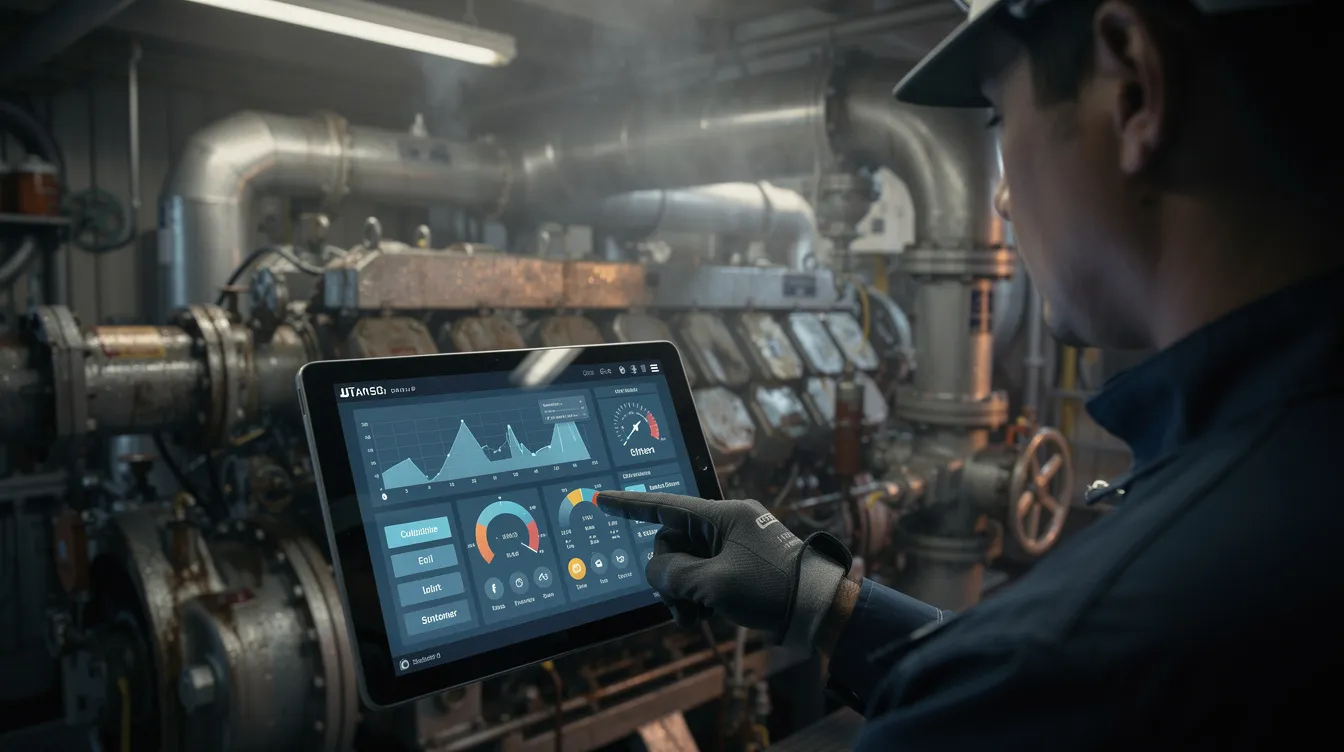
Mobile apps let engineers view, execute, and close jobs with checklists, photos, and offline capability. Sensors now feed temperature, pressure, oil quality, and vibration data into PMS to trigger condition based maintenance for critical machinery.
ISO 23323:2021 defines minimum functions for software-based planned maintenance systems, including scheduling, recording, reporting, analysis, and optimization. Nautilus Shipping evaluates these technologies when they clearly improve safety, reliability, or cost control.
FAQs About Planned Maintenance Systems in Shipping
1. Is a planned maintenance system mandatory for my vessel?
Yes, for SOLAS-covered ships, a documented maintenance system is required. The ISM Code does not prescribe one software brand, but it does require implemented procedures and records. Class societies and charterers now expect a structured PMS for ensuring compliance.
2. How long does it take to implement PMS on a small fleet?
For 5–8 vessels, a realistic timeframe is 6–10 weeks if existing records are complete. The work usually includes data collection, setup, pilot testing, crew training, and final rollout.
3. Can PMS support both preventive and condition-based maintenance?
Yes. Modern PMS platforms manage fixed-time tasks, running-hour tasks, corrective maintenance, and condition-based maintenance in the same system. This helps balance safety-critical routines with data-led optimization.
4. How does PMS interact with crew management and work-rest regulations?
Planned maintenance must respect duty rosters, STCW rest limits, cargo schedules, and operational constraints. PMS job lists help chief engineers avoid fatigue risks while keeping critical maintenance on schedule.
5. What should shipowners look for when choosing a PMS with a ship manager?
Ship owners should check class acceptance, ease of use, integration with procurement and safety systems, reporting quality, support for condition-based maintenance, and the manager’s escalation process for overdue jobs.