
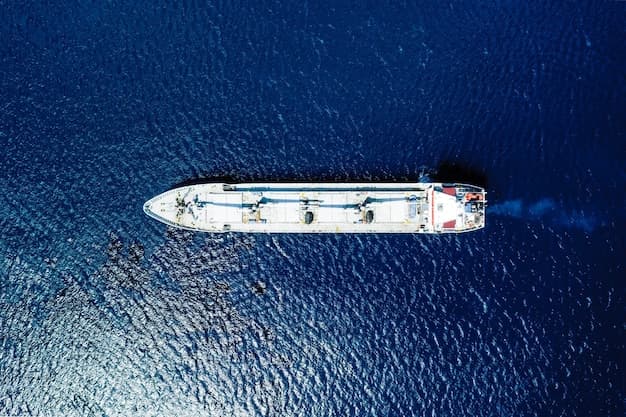
The Longest Ships in the World: Engineering at an Unimaginable Scale
Ships have always captured human imagination – not just for their size, but for what they represent: movement, trade, ambition, and engineering brilliance across the seas. Over centuries, shipbuilding has evolved from wooden boats to steel vessels capable of carrying entire economies across the world. Among them, the longest ships stand as milestones of innovation, pushing the limits of ship size, dimensions, and purpose.
The Longest Ships Ever Built
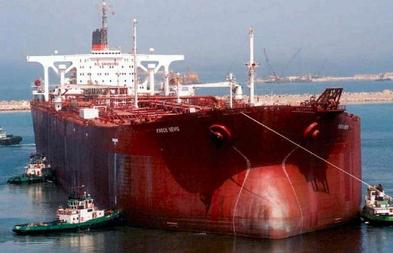
Image Credits/Source: Wikipedia
The largest ship ever constructed remains the legendary Seawise Giant – a benchmark in maritime history.
-
Maximum length: 458 meters
-
Type: Very large crude carrier
-
Built: 1979, Japan
This was not just one of the biggest ships built, but a defining moment in engineering. As a large crude carrier, it transported immense volumes of crude oil, operating across key trade routes. When fully loaded, its deadweight tonnage exceeded 560,000 tonnes and its gross tonnage reflected its unmatched scale.
Its size meant:
-
It could not pass through the Panama Canal or the original Panama Canal locks
-
It required massive stopping distances across open seas
-
It redefined the concept of maximum size in maritime engineering
Even today, it remains the world’s largest example of how far vessels grew in pursuit of efficiency.
What Defines Ship Size and Scale
Modern vessels are evaluated based on:
-
Length overall (LOA)
-
Beam (width)
-
Gross tonnage
-
Deadweight tonnage
-
Cargo capacity
While length grabs attention, it’s the capacity to carry more cargo across global seas that defines real impact. Over time, larger vessels have been designed to move bulk commodities, containers, and crude oil more efficiently between ports.
Oil Tankers
The evolution of oil tankers reflects the growing demand for energy transport. From early tanker vessels to massive very large crude carrier designs, the industry has consistently pushed limits.
Examples include:
-
Batillus-class tankers
-
Esso Atlantic & Esso Pacific
-
TI Class oil tankers
These tankers were specifically designed to carry enormous volumes of crude oil across oceans. Their capacity ranging into hundreds of thousands of tonnes allowed fewer trips and lower cost per unit of cargo.
However, their size created constraints:
-
Limited access to smaller ports
-
Inability to pass through the Panama Canal
-
Dependence on large ports with deep drafts
This led to the rise of mid-sized alternatives like aframax vessels, which operate efficiently across regions like the North Sea and can access more ports.
Container Ships
 Image Credits/Source: Wikipedia
As global trade expanded, container ships became the backbone of logistics. Ships like CMA CGM Marco Polo introduced a new era of ultra large container vessels.
-
Length: ~396 meters
-
Massive cargo holds
-
High gross tonnage
These vessels are built to carry thousands of containers, optimizing trade routes between continents. Their dimensions often exceed traditional panamax limits, requiring alternative routes or upgraded canal infrastructure.
Ultra Large Container Vessels
Modern shipping has moved toward ultra large container vessels that surpass traditional panamax constraints. Ships like HMM Algeciras and Ever Ace highlight this shift.
-
Designed for maximum length and efficiency
-
Operate between large ports
-
Require larger locks like those in the New Panama Canal
These larger vessels enable companies to carry more cargo while reducing cost per shipment.
Feeder Vessels
While mega ships dominate headlines, feeder vessels are equally critical.
Feeder vessels:
-
Connect smaller ports to major hubs
-
Operate where larger vessels cannot dock
-
Ensure cargo movement across various ports
Without feeder vessels, even the world’s largest container ships would struggle to distribute goods efficiently. These smaller vessels play a vital role in balancing global logistics networks.
New Panamax
The expansion of the Panama Canal introduced the concept of New Panamax.
-
Larger dimensions than traditional panamax vessels
-
Designed to pass through upgraded canal locks
-
Increased capacity for container and bulk transport
New Panamax vessels bridge the gap between older panamax vessels and ultra-large ships, allowing more flexible access to global ports.
Bulk Carriers and Ore Transport
Bulk carriers remain essential for transporting dry cargo such as coal, grain, and iron ore.
Key categories include:
-
Very large bulk carriers
-
Very large ore carriers
-
Chinamax ships
Ships like Vale Brasil demonstrate how an ore carrier can handle massive loads. These large ore carriers often operate between South America and Asia, moving raw materials at scale.
Unlike container ships, these vessels focus on volume, using expansive cargo holds and high deadweight tonnage.

Image Credits/Source: Wikipedia
Ocean Liner
The concept of the ocean liner represents a different side of maritime history – passenger travel.
Historic ships like SS France set benchmarks in both luxury and gross tonnage. Today, modern cruise ships from Royal Caribbean International redefine the category.
Ships like Harmony of the Seas combine:
-
Massive capacity
-
Entertainment infrastructure
-
Advanced dimensions
These floating cities show how royal caribbean has transformed the idea of an ocean liner into an experience-driven product.
World’s Largest
Across categories, the race to build the world’s largest ships continues. Whether it’s:
-
Oil tankers carrying crude oil
-
Container ships supporting global trade
-
Bulk carriers transporting dry cargo
Each category reflects a different economic need.
Ship Size vs Port Infrastructure
One of the biggest challenges with increasing ship size is compatibility with ports and canal systems.
-
Panamax vessels were designed for the original Panama Canal locks
-
Larger ships required new panamax upgrades
-
Some capesize vessels must travel via Cape Horn or the Cape of Good Hope
This shows how vessels grew faster than infrastructure, forcing innovation across both shipbuilding and global logistics.
Final Takeaway
From the largest ship ever built to modern ultra large container vessels, maritime engineering continues to evolve. These vessels are not just about scale – they are about ability, efficiency, and global connectivity.
As demand rises, future ships built will focus on:
-
Sustainability
-
Fuel efficiency
-
Smarter routing across seas
The evolution of the longest ships reflects a simple truth: as the world grows, so does the need to move cargo, energy, and people – faster, farther, and more efficiently across the seas.
FAQs
1. What is the longest ship ever built in the world?
The longest ship ever built is the Seawise Giant, measuring 458 meters in length. It was a very large crude carrier designed to transport massive quantities of crude oil across global trade routes. Even today, no other vessel has surpassed its overall length.
2. Why can’t the largest ships pass through the Panama Canal?
Many of the largest vessels exceed the size limits set by the original Panama Canal locks. These limits, known as Panamax constraints, restrict ship dimensions like length, beam, and draft. Only New Panamax ships can pass through the expanded canal, while larger vessels must take longer routes around Cape Horn or the Cape of Good Hope.
3. What is the difference between Panamax and New Panamax vessels?
Panamax vessels are specifically designed to fit within the original Panama Canal dimensions. New Panamax vessels, on the other hand, are larger and built to pass through the expanded canal with larger locks, allowing them to carry more cargo and improve efficiency in global trade.
4. What types of cargo do the world’s largest ships carry?
The largest ships carry different types of cargo depending on their design. Oil tankers transport crude oil, bulk carriers move dry cargo like coal and iron ore, and container ships carry packaged goods. Each vessel type is optimized for maximum capacity and efficiency across long distances.
5. Why are feeder vessels important in global shipping?
Feeder vessels play a crucial role by connecting smaller ports to major international shipping hubs. Since large container ships cannot access all ports, feeder vessels help distribute cargo efficiently, ensuring smooth movement across various ports and supporting the global supply chain.