
The maritime industry will enter 2026 with long-term climate targets and regulations, aiming towards significant reductions in greenhouse gas emissions. Between IMO’s strengthened short-term measures, the new IMO net-zero framework, and the European Union’s FuelEU Maritime Regulation, ship operators now face a decisive shift toward lower GHG emissions, tighter carbon intensity controls, and mandatory use of renewable and low-carbon fuels.
For companies operating within international shipping, especially fleets trading through EU ports or the European Economic Area, 2026 will be a year when monitoring, reporting, and compliance become an essential part of everyday operations. For Nautilus Shipping, these changes reinforce something we already believe: sustainability and strong operations go hand in hand.
The Regulatory Shift: Why 2026 Is a Defining Year
Three major regulatory pillars shape 2026:
-
IMO, short-term and mid-term measures
-
FuelEU Maritime Regulation (with the first FuelEU Report due in early 2026)
-
EU ETS expansion and stricter emissions-related compliance
Each framework aims to reduce GHG emissions, push energy efficiency, and accelerate industry adoption of renewable fuels, low-carbon fuels, and zero-emission technologies.
This collective push redefines how fleets must operate:
-
More data on energy used and fuel consumption
-
Mandatory monitoring plans
-
Clear visibility into emissions intensity
-
New economic frameworks aimed at regulating the use of fossil fuels and rewarding cleaner options
As the industry transitions away from carbon-heavy maritime fuels, these rules form the essential foundation for global climate action.
IMO Short-Term Measures: A Stronger Focus on Efficiency
Since January 2023, ships have been required to comply with the IMO’s short-term measures, which continue evolving through 2025 and impact operations in 2026.
Key Components
EEXI – Attained Energy Efficiency Existing Ship Index
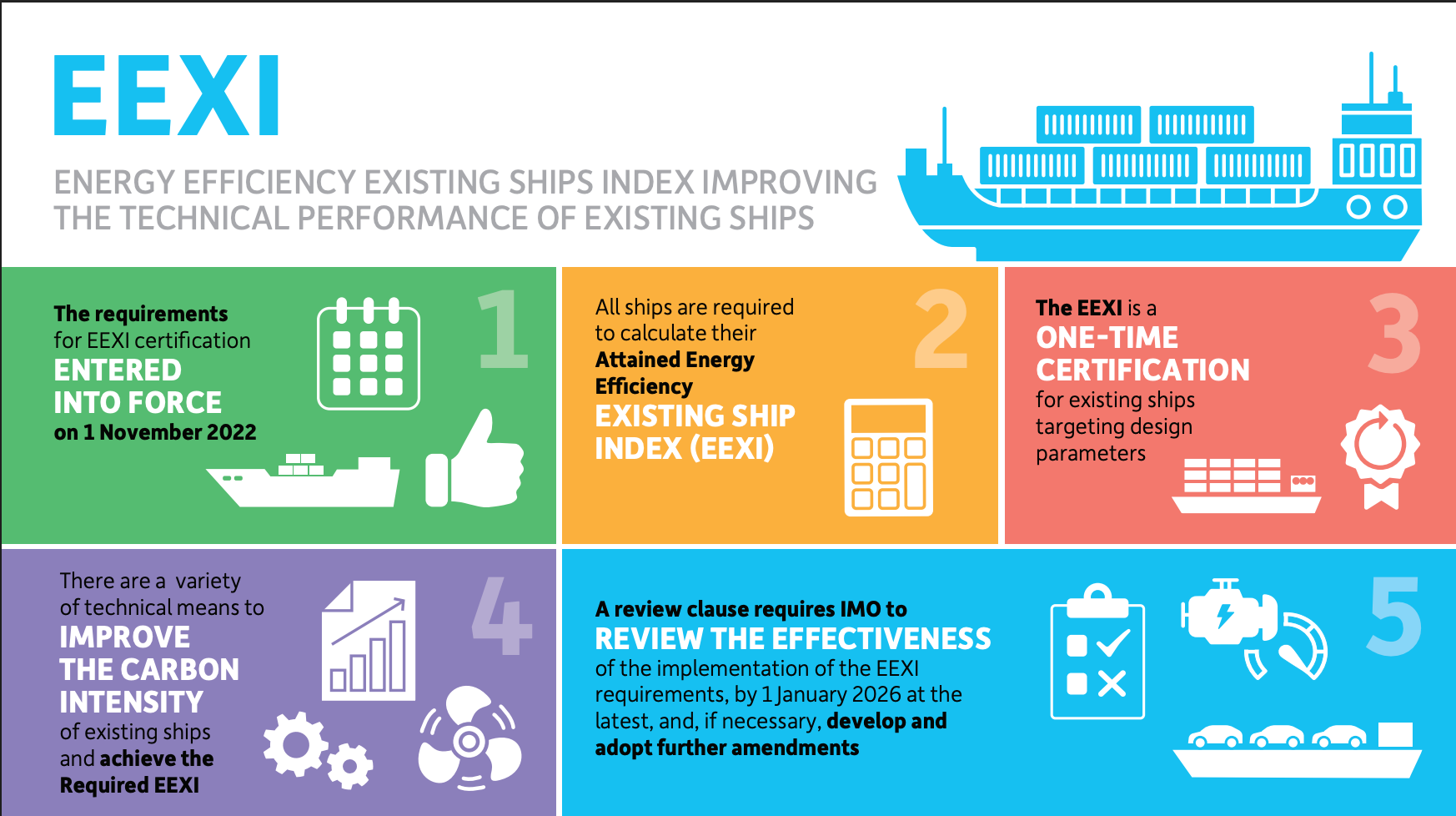
Every ship of 400 GT and above must calculate its attained EEXI and demonstrate compliance with required efficiency levels. In practice, this means:
-
Engine tuning
-
Propulsion improvements
-
The use of engine power limitation
-
Operational adjustments to manage energy consumption
These measures directly affect energy used on board and are considered an essential component of reducing greenhouse gas output.
CII – Operational Carbon Intensity Indicator
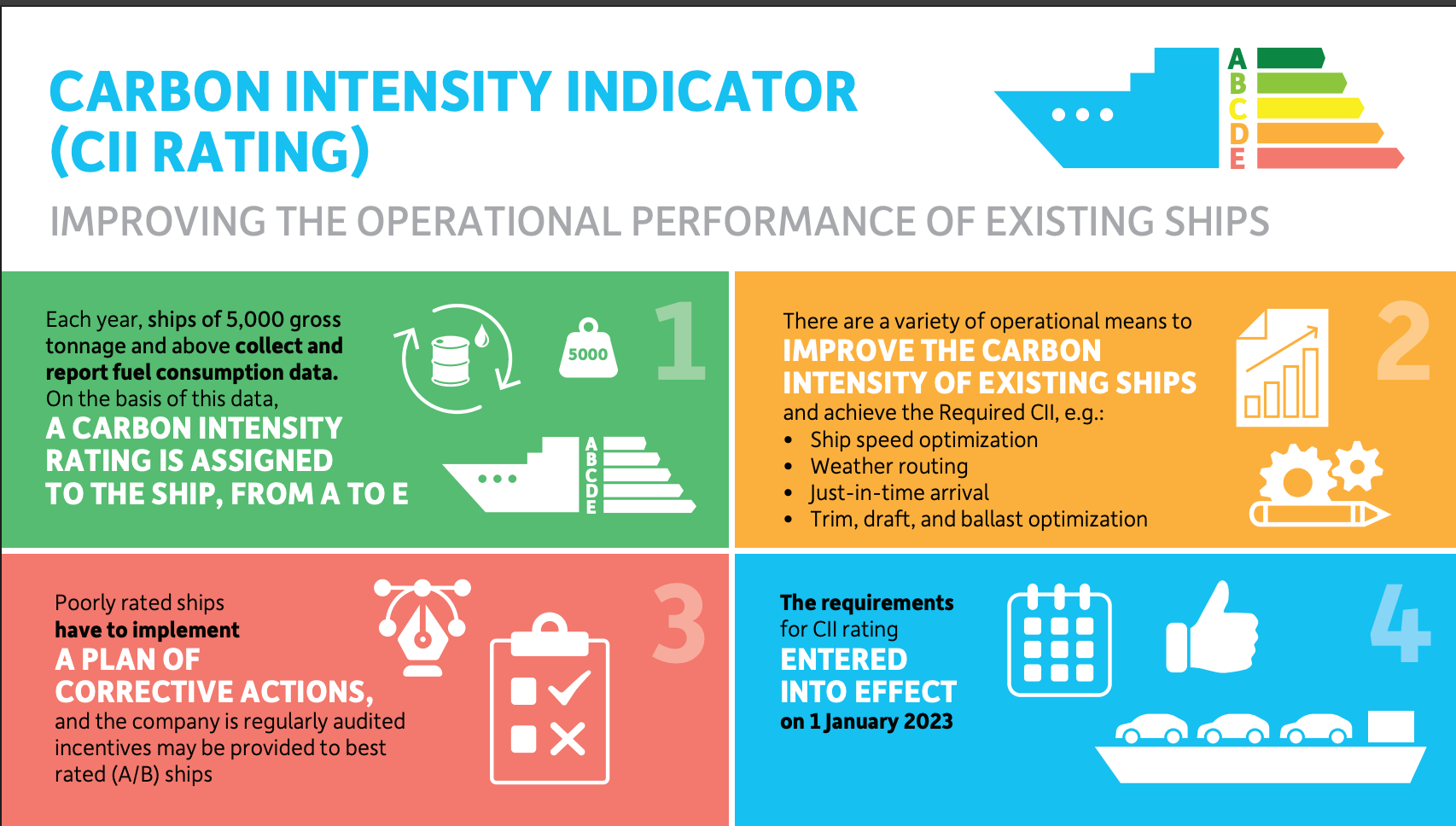
Ships of 5,000 GT and above are now rated A–E for annual carbon intensity based on:
-
Fuel consumption
-
Distance travelled
-
Cargo-carrying capacity
Ships with D ratings for three consecutive years or any E rating must implement a corrective plan in their SEEMP. This requirement remains in force through 2026, with stronger oversight and revised emission factors being developed.
The goal is simple: reduce emissions, improve energy efficiency, and promote operational best practices across the fleet.
IMO Mid-Term Measures: The IMO Net-Zero Framework (2026–2027)
Adopted in draft at MEPC 83 and set for formal adoption in October 2025, the IMO’s mid-term measures will begin shaping compliance frameworks in 2026 and fully enter into force in 2027.
IMO aimed for an 11% reduction in emissions in 2026 in order to read the roadmap of net zero emissions by 2050.
What the Framework Introduces
-
A global marine fuel standard
Ships must reduce their annual greenhouse gas intensity using a well-to-wake evaluation. -
A GHG pricing mechanism
Ships emitting above the set limit must buy remedial units. -
The IMO Net-Zero Fund
This global fund will:-
Reward low-emission ships
-
Support developing countries
-
Fund renewable energy sources and clean-fuel infrastructure
-
For ship operators, this marks the industry’s first universal pricing mechanism tied directly to GHG intensity and carbon emissions.
FuelEU Maritime Regulation: The Largest Operational Change for 2026
Among all upcoming rules, FuelEU Maritime Regulation (the EU’s framework to reduce carbon emissions from maritime transport) is the most operationally demanding for 2026.
Why It Matters
-
Applies to all ships above 5,000 GT calling at EU ports
-
Covers both EU and non-EU flagged ships
-
Regulates energy used on board, including at-berth usage
-
Measures GHG intensity on a full lifecycle basis
-
Encourages renewable and low-carbon fuels through clear targets
2025–2026: Key Actions Ship Operators Must Take
Monitoring Plan Submission
Every ship must submit a FuelEU monitoring plan (assessed by an accredited verifier) covering how it will track:
-
Energy used
-
Fuel consumption
-
Emission factors
-
Port calls
-
Onshore power supplies usage
-
Ice-class voyages (for ships operating in outermost region conditions)
This plan becomes mandatory for the reporting period beginning January 2025.
First Reporting Deadline: 31 January 2026
Ship operators must provide:
-
A fuel-based emissions report
-
Calculated GHG intensity values
-
Information on renewable fuels, carbon fuels, and synthetic fuels used
These will be submitted to a verifier and then uploaded to the FuelEU database, forming the basis for compliance status.
GHG Reduction Targets Under FuelEU
The regulation sets progressive GHG intensity reduction requirements:
-
2% by 2025
-
Steady tightening toward 80% by 2050
FuelEU Maritime applies to:
-
All energy used on board, including auxiliary use
-
100% of intra-EU voyages
-
50% of voyages to/from EU ports
Special Requirements for Passenger & Container Ships
From 2030 (and measured from the 2025 reporting period), all passenger ships, container ships, and container and passenger ships staying more than two hours must use:
-
Onshore power supplies, or
-
Other zero-emission technologies
This rule alone is expected to significantly reduce carbon emissions at major ports.
EU ETS 2026: Cost Implications for Ship Operators
The EU ETS regulations require ship operators to pay for CO₂ emissions based on verified reports.
By 2026:
-
100% of intra-EU emissions are covered
-
50% of emissions on voyages entering or leaving EU ports
-
Non-compliance can lead to financial penalties and exclusion from EU port access
For fleets, this means that reducing emissions is not only regulatory—it is economically necessary.
Other IMO Developments Influencing 2026

a. Expanded Emission Control Areas (ECAs)
New ECAs in:
-
Canadian Arctic Waters
-
Norwegian Sea
Ships must adjust their maritime fuels, compliance planning, and voyage optimisation accordingly.
b. Updated Guidelines for SEEMP and DCS
Ships must now report:
-
More granular energy consumption data
-
Updated transport work values
-
More detailed operational profiles
c. Underwater Radiated Noise (URN) Guidelines
A three-year experience-building phase continues through 2026, encouraging fleets to adopt quieter, more efficient designs.
d. Ballast Water Management Updates
Further harmonisation of:
-
Major conversion evaluations
-
Type-approval procedures
-
Record-keeping for operations under challenging water conditions
Alternative Fuels and Zero-Emission Technologies: What Fleets Must Prepare For
Regulations across IMO and EU frameworks collectively push fleets toward:
-
Renewable fuels
-
Low-carbon fuels
-
Synthetic fuels
-
Carbon capture technologies
-
Hybrid or battery-supported propulsion
-
Zero-emission technologies such as fuel-cell systems
-
Wind-assisted propulsion as a compliance enhancer
The maritime sector’s fuel mix will shift substantially as fossil fuels face stricter limits and new requirements.
What All This Means for Shipping Companies
Compliance Becomes Continuous
2026 marks a move away from annual compliance to continuous operational compliance:
-
Every voyage
-
Every port call
-
Every tonne of fuel burned
Documentation Must Be Precise
Ship owners must maintain:
-
SEEMP
-
EEXI calculations
-
FuelEU monitoring plans
-
Verified annual FuelEU document
-
ETS-related documentation
Incentives for Cleaner Ships
Member States and authorities are encouraged to provide incentives to highly rated ships.
This may include:
-
Reduced port fees
-
Priority berthing
-
Easier green-corridor access
A Need for Integrated Operational Strategy
Fleets must synchronise:
-
Technical upgrades
-
Procurement of new fuels
-
Voyage optimisation
-
Crew training
-
Environmental reporting
A fragmented approach will no longer be sufficient.
Preparing for 2026: The Nautilus Perspective
From our experience managing diverse fleets across global routes, the most effective preparation for the new sustainability landscape includes:
-
Strengthening onboard and shore-based reporting systems
-
Upgrading SEEMP with clear CII improvement paths
-
Reviewing hull performance and propulsion efficiency
-
Planning early for alternative fuels and emission-reducing technologies
-
Training crew and shore teams on new compliance workflows
-
Running simulations for ETS and FuelEU cost exposure
The objective is not just compliance. It is achieving cost-effective, future-ready fleet performance.
Conclusion
A Pivotal Year for Maritime Sustainability
2026 brings regulations that will permanently reshape maritime transport. From tighter carbon intensity limits to detailed monitoring plans, from lifecycle-based GHG intensity assessments to stronger incentives for renewable and low-carbon fuels, the path forward is clear: shipping must evolve.
For Nautilus Shipping, this transition is an opportunity, not a challenge. Better efficiency, smarter routing, cleaner energy, and stronger operations all lead to the same outcome: a safer, more sustainable, and more competitive fleet.
As global frameworks intensify, ship operators who prepare early will benefit most. The industry’s direction is unmistakable, and 2026 is only the beginning.
FAQs
1. What major sustainability rules will affect shipping in 2026?
New global and regional regulations will tighten limits on GHG emissions, carbon intensity, and energy efficiency, pushing vessels toward cleaner fuels and stricter reporting.
2. How will FuelEU Maritime impact ships calling at EU ports?
FuelEU Maritime requires vessels to progressively lower the greenhouse gas intensity of maritime fuels and maintain verified, accurate digital reporting to avoid penalties.
3. What should ship operators do to prepare?
Operators must upgrade efficiency measures, strengthen monitoring plans, explore renewable and low-carbon fuels, and prepare for expanded digital compliance requirements.
4. Will these rules increase costs?
Yes, initial costs may rise due to technology upgrades and fuel changes, but long-term savings from better energy consumption and efficiency can offset these expenses.
5. Are zero-emission technologies and carbon capture important?
They will play a growing role by helping ships meet stricter emissions intensity targets and stay compliant as regulations evolve.