

India now stands as the world’s second-largest supplier of seafarers, and the momentum heading into 2026 shows no signs of slowing. This guide covers the regulatory landscape, career pathways, vessel-type specializations, salary trends, training requirements and welfare standards that define the experience of Indian seafarers in 2026, along with how Nautilus Shipping supports both shipowners and crew through it all.
Overview of Indian Seafarers in 2026
India has overtaken China to become the world’s second-largest supplier of seafarers, trailing only the Philippines. According to the BIMCO-ICS Seafarer Workforce Report 2026, India contributes over 311,936 maritime professionals to global shipping, accounting for 12.16% of the world’s seafaring workforce. Within that figure, India supplies 140,718 officers, or 13.41% of the world’s total ship officers, a position that carries significant economic weight for the country’s maritime sector.
Several forces have sustained this demand. Post-COVID trade recovery pushed fleet utilization higher, while Red Sea and Black Sea routing disruptions extended voyage times, requiring more crew rotations. Fleet expansion in the bulk carrier and LPG carrier segments, particularly dual-fuel newbuilds, has further widened the pool of opportunities for Indian crew.
The ranks in highest demand in 2026 are chief officer, chief engineer, electro-technical officers and experienced ratings across dry and gas segments. The maritime industry faces a global shortfall of 39,100 certified officers in 2026, and India aims to fill that gap under Mission 20%, which targets one in every five seafarers globally to be of Indian origin. Nautilus Shipping, as a B2B ship-management partner offering end-to-end crew management and technical management services, plays a direct role in connecting qualified Indian crew with shipowners who value safety, compliance and performance.
Regulatory Framework and Role of the Directorate General of Shipping
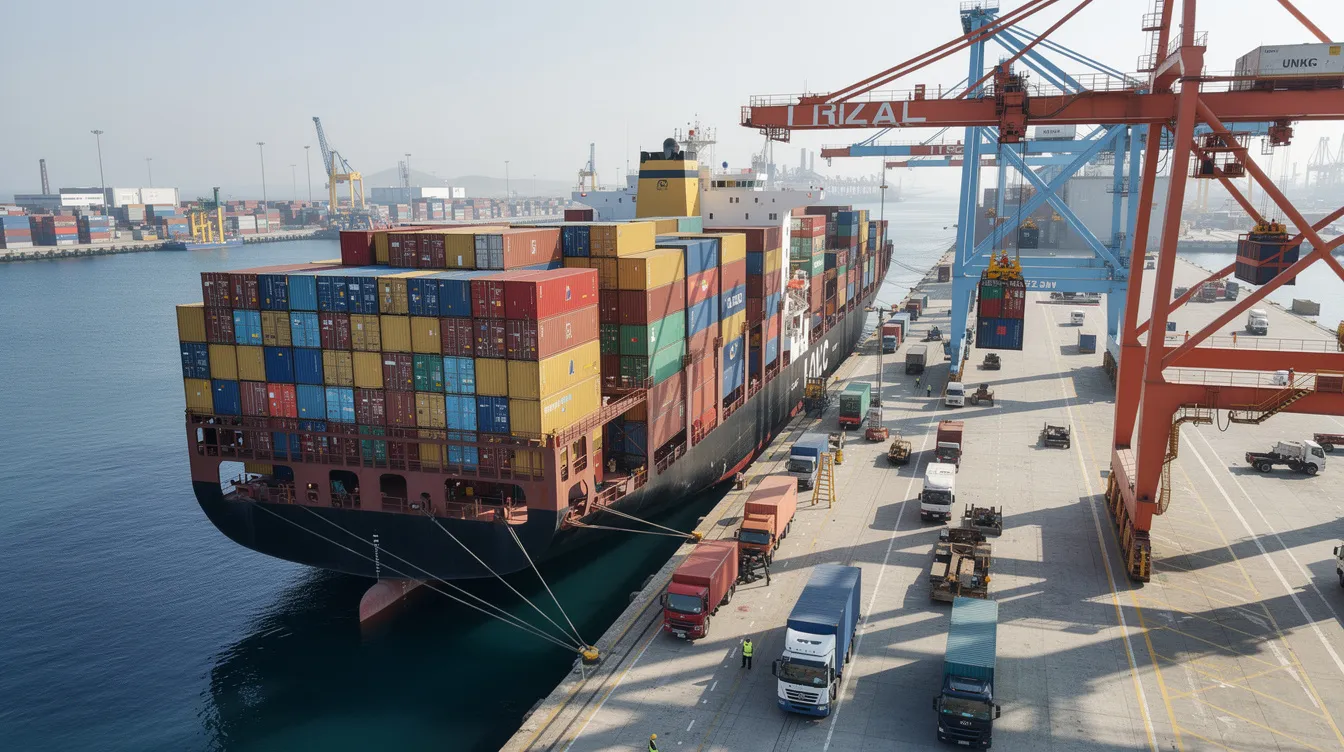
The Directorate General of Shipping (DG Shipping), under the Ministry of Ports, Shipping and Waterways, is the foundation of India’s maritime regulatory structure. In 2026, its remit includes issuing Certificates of Competency, enforcing STCW 2010 compliance, implementing MLC 2006 standards and regulating RPSL-licensed recruitment agencies.
India has introduced stricter Continuous Discharge Certificate eligibility criteria through DG Order 12 of 2026. Candidates must complete pre-sea training courses from approved institutes; standalone module-based CDCs are no longer issued. The CDC application process now requires verified pre-sea pathways, and the upper age limit for GP Rating courses has been raised from 25 to 28 years. Additionally, the IMO is revising the STCW framework to include new technologies and operational requirements, which will impact certification timelines.
Digital governance is transforming maritime administration through initiatives like the E-Samudra platform, e-Migrate and online CoC/CoP verification. The Merchant Shipping Act, 2025 modernizes employment agreements, rest hours and welfare provisions.
Key regulations shipowners and seafarers must track in 2026:
- Merchant Shipping Act, 2025 – updated welfare, wages and manning provisions
- DG Order 12 of 2026 – revised CDC eligibility, pre-sea training mandate
- DGS Circular No. 31 of 2025 – RPSL verification of CoCs, sea service records and fraud prevention
- STCW 2010 amendments – refresher courses, simulator requirements, gas cargo endorsements
- MLC 2006 enforcement – stricter rest hour monitoring, accommodation standards, medical coverage
Nautilus Shipping operates within this framework as an RPSL-verified company, ensuring no unauthorized agents are used and that all documentation is verified before deployment.
Career Pathways for Indian Merchant Navy Officers in 2026
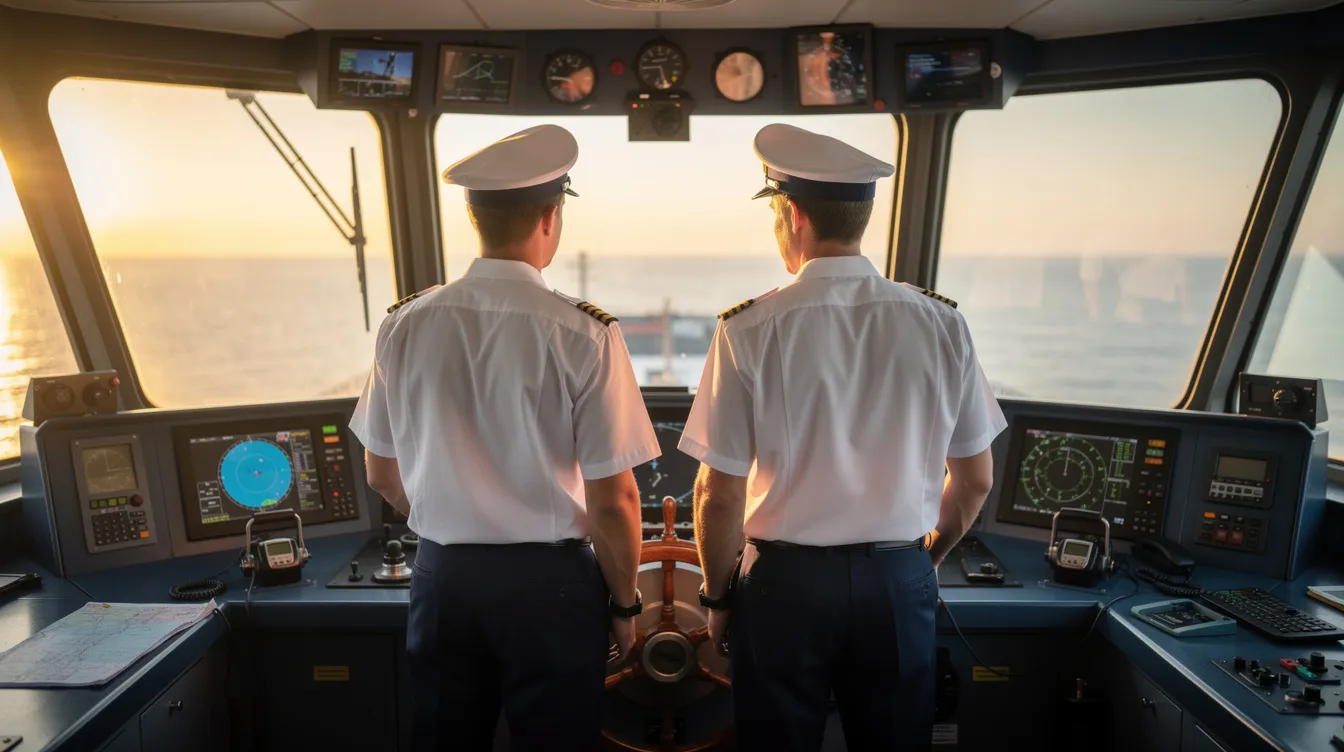
The officer career ladder in the merchant navy follows two tracks. On the deck side, the journey runs from Deck Cadet through 3rd Officer, 2nd Officer, Chief Officer and ultimately Master. On the engine side, it moves from Engine Cadet to 4th, 3rd, 2nd Engineer and then Chief Engineer. ETOs follow a parallel certification path.
Eligibility criteria for joining merchant navy courses in 2026 are clearly set:
- Minimum age for candidates is 17.5 years
- Academic requirement: eligibility for merchant navy courses typically requires 10th-grade qualifications with 50% marks; deck officer routes require 12th with PCM at 60% aggregate
- Medical fitness: seafarers must meet medical fitness requirements including 6/6 vision and no colour blindness
- On-board training: candidates must complete 18 months of on-board training; a minimum of 18 months on-board training is required before sitting for CoC exams
- Certification: successful candidates receive an Indian CDC after training from a DG-approved institute
- Salaries for merchant navy officers range from INR 60,000 to 2,00,000 monthly at junior and mid-level ranks, scaling significantly higher for senior positions on gas or tanker vessels
The Join Merchant Navy institute offers a comprehensive range of maritime courses, and companies like it provide nutritious meals for students and ensure medical facilities are available on campus for prompt assistance. Sponsorship trends in 2026 show a shift toward company-sponsored pre-sea training and structured cadet berths, reducing the time it takes to reach officer rank.
Nautilus Shipping builds officer development pipelines for owners through structured sea-time planning, onboard mentoring and shore-based upgrading courses, ensuring a steady supply of ready officers at every position.
Vessel Types Employing Indian Seafarers: Bulk Carrier, LPG Carrier and Beyond
Indian seafarers serve across nearly every vessel type in global fleets. Specialization matters because the skills required on a bulk carrier differ substantially from those on a gas carrier, and career progression depends on building type-specific experience.
Bulk carrier employment remains a core segment. Common 2026 trade routes include India-China coal and iron ore, Indo-Europe agricultural bulk and West Africa trades. Officers need strong cargo planning, hold cleaning, ballast water management and stability calculation skills. Ratings with experience in crane operations and maintenance are particularly valued.
LPG carrier and gas carrier opportunities demand higher specialization. Officers must be familiar with IGF Code requirements, cargo containment systems, cryogenic handling and gas carrier safety protocols. Shipping is moving toward alternative fuels such as methanol, ammonia and hydrogen, and dual-fuel VLGC newbuilds are expanding the need for gas-trained crew. Owners strongly prefer officers with prior gas experience.
Other segments where Nautilus Shipping manages or supplies crew include container ships, oil and chemical tankers, general cargo and offshore support vessels. A junior officer who builds sea time on geared bulk carriers can transition to small tankers or LPG carriers after completing the required endorsements, and Nautilus facilitates this through vessel-specific familiarization and training coordination.
Employment Trends and Demand in 2026
Hiring trends across 2024-2026 show increased demand for certified officers, moderate competition at entry level and higher churn among senior ranks. The worldwide shipping industry faces a structural deficit of STCW-certified officers, and this gap is most acute at the chief officer and chief engineer level, where retirement and shore-side migration thin the available pool.
Demand hotspots include ETOs (driven by vessel electrification and digital systems), tanker officers with vetting and oil-major approval experience, and gas-qualified engineers. Freight market cycles and environmental regulations like EEXI and CII ratings indirectly affect crew demand by altering voyage patterns and operational complexity.
Nautilus Shipping stabilizes manning needs for owners through long-term crew pools and retention programs, offering Indian seafarers predictable deployment cycles and clear career visibility.
Training, Upskilling and Compliance for Indian Seafarers
Continuous training is non-negotiable in 2026. New IMO decarbonization rules, alternative fuel adoption, digital navigation tools and cybersecurity requirements have expanded the skills every seafarer must maintain. Seafarers need to upskill continuously to meet evolving industry standards and practices, and the maritime industry’s push for net-zero carbon emissions is creating new opportunities for seafarers who invest in the right certifications.
Mandatory courses and refreshers in 2026 include:
- STCW basic and advanced safety modules
- ECDIS, BRM/ERM, HAZMAT and ship security duties
- Tanker endorsements (oil, chemical, gas)
- Gas cargo courses for LPG carrier crew (IGF Code familiarization)
- Cyber security awareness under ISM Code requirements
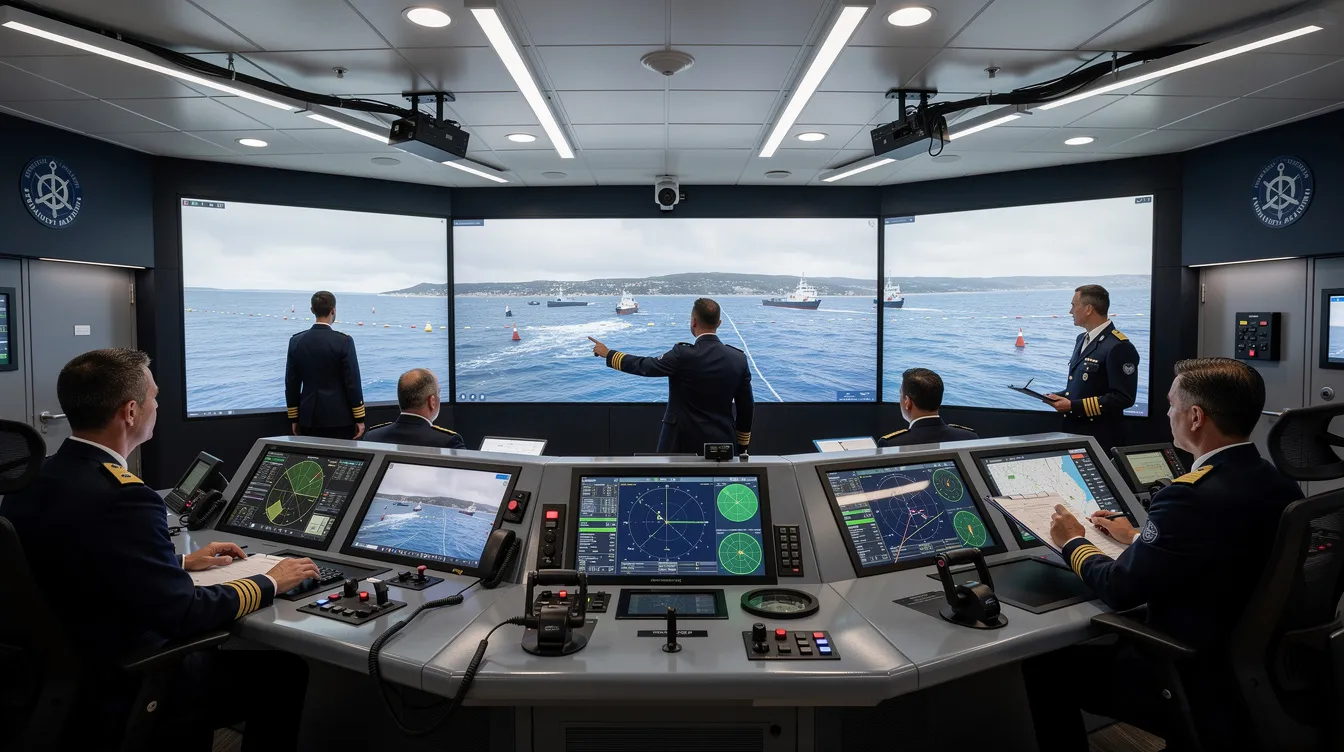
Indian maritime training institutes are expanding to bridge the shortage of certified officers, and India’s maritime training facilities are developing to support decarbonization efforts. DG-approved academies and simulator centres now use blended learning models that evolved from the COVID-era online formats, combining remote theory modules with mandatory hands-on simulator and on-board assessments.
Nautilus Shipping works with training partners to arrange vessel-specific familiarization, dry-docking exposure for chief engineer and superintendent-track officers, and PSC and vetting preparation. The goal is practical: every officer in the crew pool should know exactly what courses to complete at each rank to stay employable.
Seafarer Welfare, Mental Health and Family Support
The 2020-2021 crew change crisis left a lasting mark. In 2026, the well-being of Indian seafarers is backed by stronger regulation and higher industry awareness, but challenges remain. Shipowner abandonment and unpaid wages threaten seafarer welfare globally, as documented by rising abandonment cases. Heightened geopolitical risks affect the safety of Indian crews operating in volatile regions, adding another layer of stress.
Comfortable living conditions are essential for seafarer well-being. Welfare standards that organizations should insist upon in 2026 include:
- Internet connectivity onboard for regular family communication
- Confidential mental health counselling helplines accessible from ship and shore
- Strict rest hour monitoring compliant with MLC 2006
- Accommodation, food and recreational facilities meeting or exceeding flag state standards
- Timely wage payments and transparent contract terms
Nautilus Shipping embeds welfare into its crew management model through 24/7 shore support, family liaison for emergencies, assistance with documentation and visas, and proactive care for crew during contract extensions or delays.
Digitalization, Data and the Future Skillset for Indian Seafarers
The period from 2023 to 2026 has accelerated adoption of digital fleet management platforms, remote condition monitoring and performance dashboards. For Indian officers, this means new competencies are required alongside traditional seamanship: electronic logbook usage, voyage optimization tools, engine performance analytics and basic cyber security awareness.
Fleet efficiency and emissions regulations make data literacy increasingly important for chief officer and chief engineer roles. Officers who can interpret fuel consumption curves, manage CII reporting and work with planned maintenance systems are the ones employers select first. The technological shift is not replacing seafarers; it is raising the bar for what excellence looks like at sea.
Nautilus Shipping uses data-driven ship management across its fleet, including condition monitoring, performance analytics and structured feedback loops. Officers and engineers are trained to engage with these tools so that every voyage generates actionable insights.
How Nautilus Shipping Supports Shipowners and Indian Seafarers in 2026
Nautilus Shipping is a full-service ship management and crew management partner built around Indian seafarers and global shipowners. Our services span technical management, crew management, vessel inspections, commercial ship services and performance management for bulk carriers, tankers, LPG carriers, containers and specialized vessels.
For Indian seafarers, the offering is clear: transparent recruitment through RPSL-verified channels, fair contracts with defined terms, rank-appropriate deployment, and a career pipeline from junior ranks to chief officer and chief engineer. For shipowners, the benefits include regulatory compliance with DG Shipping and ISO/ISM standards, a robust HSSE culture, and a focus on sustainability and carbon efficiency that helps build long-term fleet value.
The trajectory for Indian seafarers in 2026 and beyond points toward continued growth. Fleet renewal under IMO’s decarbonization push, rising trade volumes and India’s growing share of the global workforce all enhance the case for partnering with a compliant, quality-focused manager.
Discover how Nautilus Shipping can connect you with reliable Indian crew and ship management solutions. Subscribe to our news and updates, or reach out to start a conversation about your fleet’s manning needs.